
Planning for retirement requires understanding the tools available to build long-term wealth, and an ira pension represents one of the most accessible vehicles for tax-advantaged savings. Whether you're just starting your career or approaching retirement, Individual Retirement Accounts offer flexibility, tax benefits, and the potential to grow your nest egg over decades. With updated contribution limits and evolving regulations in 2026, now is an excellent time to evaluate how an ira pension fits into your broader financial strategy and what steps you can take to maximize its benefits.
Understanding IRA Pension Fundamentals
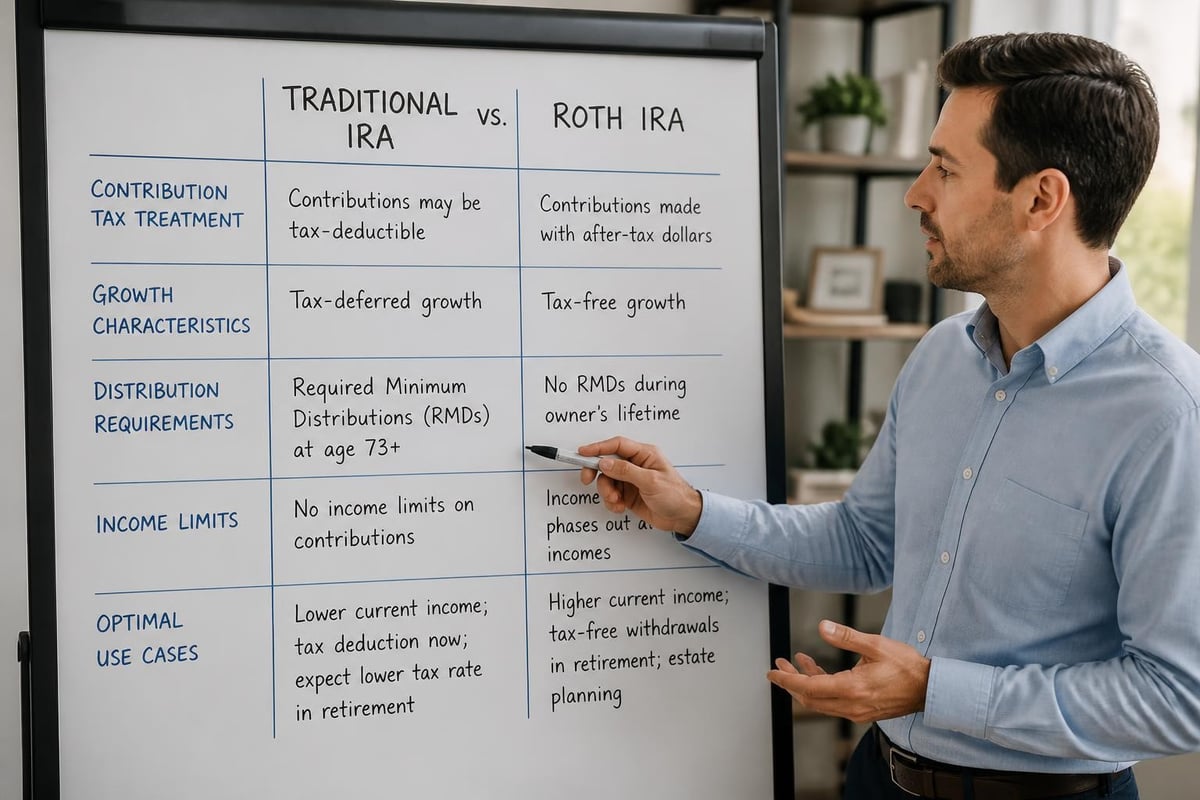
An ira pension refers to the use of Individual Retirement Accounts as a cornerstone of retirement planning. Unlike employer-sponsored pension plans that provide defined benefits, IRAs give you control over contributions, investment choices, and distribution strategies. These accounts come in two primary forms: traditional IRAs and Roth IRAs, each with distinct tax treatments and eligibility requirements.
Traditional IRAs allow you to make potentially tax-deductible contributions, reducing your taxable income in the year you contribute. Your investments grow tax-deferred, meaning you won't pay taxes on earnings until you withdraw funds in retirement. This structure benefits individuals who expect to be in a lower tax bracket during retirement than during their working years.
Roth IRAs work differently. Contributions are made with after-tax dollars, so there's no immediate deduction. However, qualified distributions in retirement are entirely tax-free, including all earnings. This makes Roth IRAs particularly attractive for younger workers or those who anticipate higher tax rates in the future.
Key Features That Define IRA Pensions
- Tax-advantaged growth on investments
- Contribution limits adjusted annually for inflation
- Flexibility in investment choices (stocks, bonds, mutual funds, ETFs)
- Portability that isn't tied to any specific employer
- Estate planning benefits for beneficiaries
The strategic value of an ira pension lies in its ability to complement other retirement savings vehicles. Many individuals use IRAs alongside 401(k) plans, creating a diversified tax strategy that provides flexibility during retirement.
2026 Contribution Limits and Eligibility
For 2026, the IRS has adjusted contribution limits to account for inflation, providing savers with increased capacity to build their ira pension accounts. According to updated IRS guidelines on retirement plan limits, understanding these thresholds helps you maximize tax benefits while staying compliant.
Standard Contribution Limits
| Account Type | Under Age 50 | Age 50 and Over |
|---|---|---|
| Traditional IRA | $7,000 | $8,000 |
| Roth IRA | $7,000 | $8,000 |
The additional $1,000 for individuals aged 50 and above represents a catch-up contribution designed to help those closer to retirement accelerate their savings. These limits apply to the total contributions across all your traditional and Roth IRA accounts combined, not to each account separately.
Income Phase-Out Ranges
Roth IRA eligibility depends on your modified adjusted gross income (MAGI). For 2026, the phase-out ranges determine whether you can make full, partial, or no contributions to a Roth IRA.
Single filers:
- Full contribution: MAGI under $146,000
- Partial contribution: MAGI between $146,000 and $161,000
- No contribution allowed: MAGI over $161,000
Married filing jointly:
- Full contribution: MAGI under $230,000
- Partial contribution: MAGI between $230,000 and $240,000
- No contribution allowed: MAGI over $240,000
Traditional IRA contributions face different rules. Anyone with earned income can contribute, but the deductibility of those contributions depends on whether you're covered by a workplace retirement plan and your income level. The IRS Publication 590-A provides comprehensive details on contribution rules and deduction limits.
Strategic Tax Planning with IRA Pensions
Building an effective ira pension strategy requires understanding the tax implications at every stage. The decisions you make today about which type of IRA to fund and how much to contribute can significantly impact your financial flexibility decades from now.
Maximizing Deductions with Traditional IRAs
If you qualify for the full deduction, traditional IRA contributions directly reduce your adjusted gross income. This creates immediate tax savings that can be particularly valuable during high-earning years. For example, a $7,000 contribution in the 24% tax bracket saves $1,680 in federal taxes for 2026.
However, the value extends beyond the initial deduction. Tax-deferred growth means your investments compound without the drag of annual taxation on dividends, interest, or capital gains. Over 20 or 30 years, this compounding effect can substantially increase your ira pension balance compared to taxable accounts.
Building Tax-Free Income with Roth IRAs
Roth IRAs offer no upfront deduction, but the long-term benefits can outweigh the initial tax cost. Consider that all qualified withdrawals-both contributions and earnings-come out tax-free after age 59½, provided the account has been open for at least five years.
This creates powerful planning opportunities:
- Tax diversification in retirement, allowing you to manage which accounts to tap based on your tax situation each year
- No required minimum distributions during your lifetime, letting money grow as long as you want
- Estate planning advantages since beneficiaries can inherit tax-free growth potential
Working with a fiduciary advisor can help you model different scenarios and determine the optimal mix of traditional and Roth contributions based on your current tax bracket, future income projections, and retirement timeline.
Investment Management Within Your IRA Pension
The account structure matters, but investment selection determines your actual returns. An ira pension offers broad flexibility in how you allocate assets, making it essential to develop a coherent investment strategy aligned with your risk tolerance and time horizon.
Asset Allocation Considerations
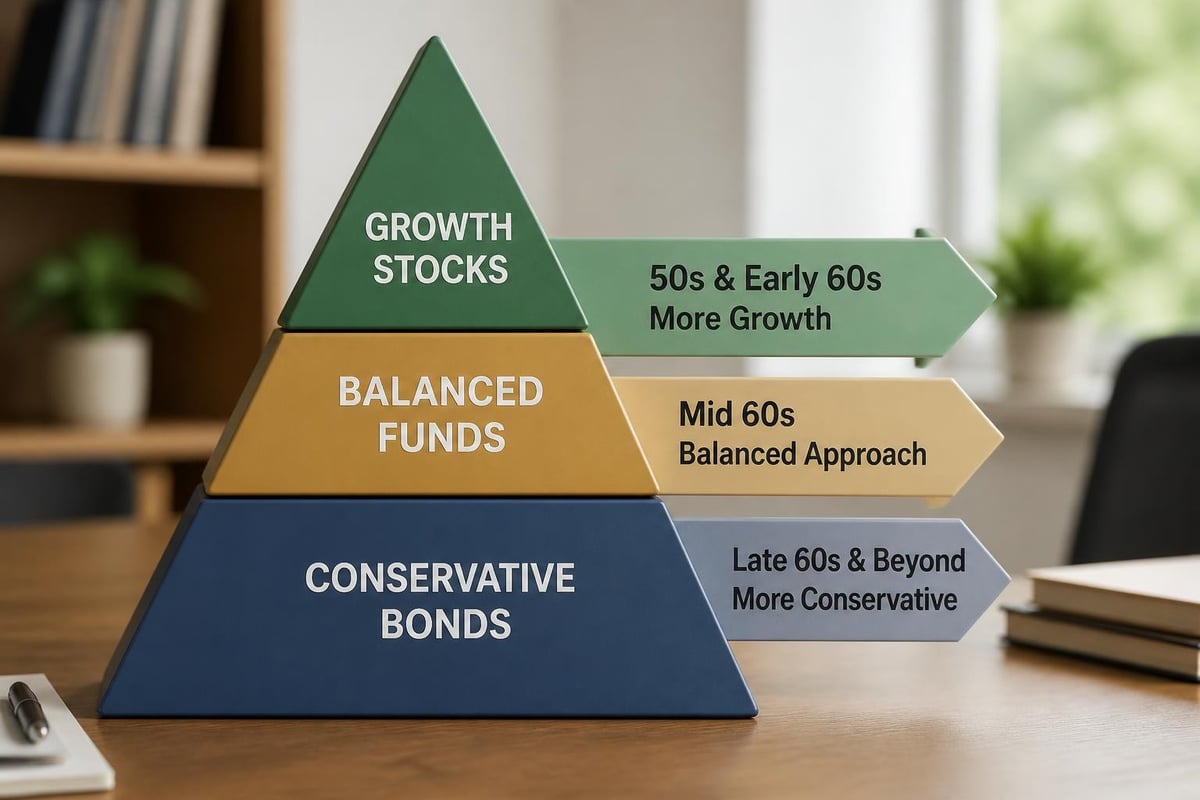
Years to Retirement | Typical Stock Allocation | Typical Bond Allocation | Focus
30+ years | 80-100% | 0-20% | Growth
20-29 years | 70-85% | 15-30% | Growth with stability
10-19 years | 50-70% | 30-50% | Balanced approach
5-9 years | 35-50% | 50-65% | Capital preservation
0-4 years | 20-35% | 65-80% | Income and safety
These ranges provide general guidance, but individual circumstances vary. Your risk capacity, other income sources, Social Security benefits, and emotional tolerance for volatility all influence the appropriate allocation.
Tax-Efficient Asset Placement
One advanced strategy involves coordinating which investments you hold in your ira pension versus taxable accounts. Since traditional IRAs shelter gains from current taxation, they're ideal for:
- High-turnover strategies that generate frequent taxable events
- Bonds and REITs that produce ordinary income taxed at higher rates
- Investments expected to generate significant capital gains
Conversely, tax-efficient index funds or stocks you plan to hold long-term may work better in taxable accounts, where long-term capital gains rates apply and you can harvest losses for tax benefits.
Required Minimum Distributions and Withdrawal Rules
Understanding when and how you must take money from your ira pension prevents costly penalties and allows for strategic distribution planning. The rules differ significantly between traditional and Roth IRAs, creating opportunities to optimize your tax situation in retirement.
RMD Requirements for Traditional IRAs
Traditional IRA owners must begin taking required minimum distributions starting at age 73, as outlined in the IRS retirement plan RMD FAQs. Your first RMD is due by April 1 of the year following the year you turn 73, with subsequent distributions required by December 31 each year.
The RMD amount is calculated by dividing your account balance as of December 31 of the prior year by a life expectancy factor from IRS tables. The Kiplinger guide on calculating RMDs provides detailed examples and current divisor tables.
Consequences of missing RMDs are severe: a 25% penalty on the amount you should have withdrawn (reduced to 10% if corrected within two years). This makes compliance critical for anyone with a traditional ira pension.
Roth IRA Distribution Flexibility
Roth IRAs face no RMDs during the original owner's lifetime, providing continued tax-free growth potential regardless of age. This makes them valuable for:
- Legacy planning when you don't need the funds for living expenses
- Emergency reserves in retirement that don't trigger tax consequences
- Flexibility to manage taxable income year-to-year
However, Roth beneficiaries generally must take distributions based on the SECURE Act rules, though the inherited amounts remain tax-free.
Early Withdrawal Considerations
Accessing your ira pension before age 59½ typically triggers a 10% early withdrawal penalty in addition to regular income taxes on traditional IRA distributions. However, numerous exceptions exist, including:
- First-time home purchase (up to $10,000 lifetime)
- Qualified higher education expenses
- Unreimbursed medical expenses exceeding 7.5% of AGI
- Substantially equal periodic payments (SEPP)
- Disability or death
The IRS Publication 590-B details all distribution rules and exceptions comprehensively.
Beneficiary Planning and Inherited IRA Pensions
Your ira pension doesn't disappear when you pass away-it transfers to designated beneficiaries according to specific rules that have changed significantly in recent years. The SECURE Act of 2019 fundamentally altered how non-spouse beneficiaries must handle inherited IRAs, making beneficiary planning more important than ever.
The Ten-Year Rule
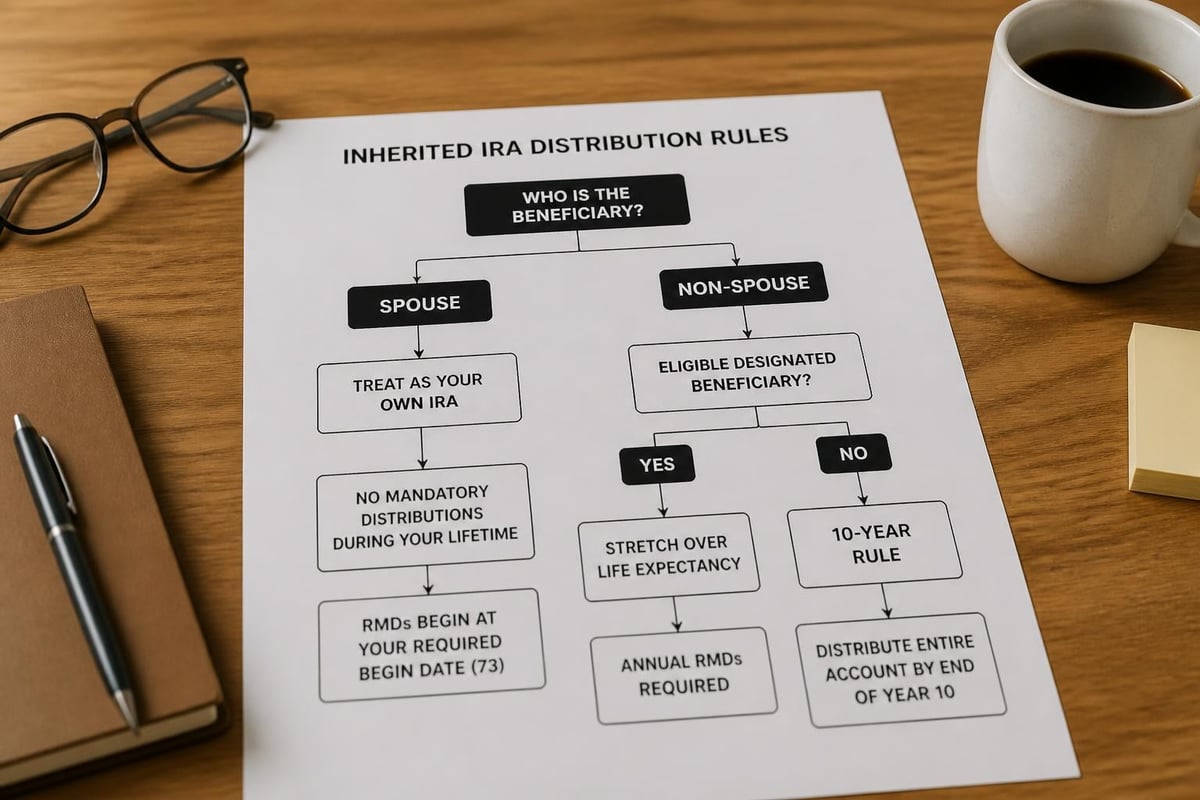
Most non-spouse beneficiaries who inherit an ira pension after 2019 must deplete the account within ten years of the original owner's death. This replaced the old "stretch IRA" strategy that allowed beneficiaries to take distributions over their lifetime.
Exceptions exist for eligible designated beneficiaries, including:
- Surviving spouses (who have additional options)
- Minor children (until they reach majority)
- Disabled or chronically ill individuals
- Beneficiaries not more than ten years younger than the deceased
These individuals can still use life expectancy-based distributions in many cases.
Spousal Rollover Options
Surviving spouses have the most flexibility when inheriting an ira pension. They can:
- Treat it as their own by rolling it into their own IRA
- Remain as beneficiary and take distributions based on their life expectancy
- Disclaim the inheritance if other planning objectives make that preferable
The choice depends on the survivor's age, financial needs, and whether the deceased spouse had already started RMDs. Understanding beneficiary rules helps ensure the most tax-efficient transfer of wealth.
Trust as Beneficiary Considerations
Some individuals name trusts as ira pension beneficiaries to control distributions or protect assets. This adds complexity but can serve specific goals like:
- Providing for minor children or individuals with special needs
- Protecting assets from creditors or divorce
- Ensuring funds are used according to your wishes
Trusts must meet specific IRS requirements to qualify as designated beneficiaries, making professional guidance essential for this strategy.
Coordinating Your IRA Pension with Other Retirement Accounts
An ira pension rarely exists in isolation. Most retirement savers accumulate multiple accounts throughout their careers, and coordinating these vehicles creates opportunities for enhanced flexibility and tax efficiency.
IRA and 401(k) Coordination Strategies
Many individuals contribute to both employer 401(k) plans and IRAs simultaneously. Since 401(k) contribution limits are much higher ($23,000 for under-50 in 2026), maxing out your workplace plan usually takes priority if you can't fully fund both.
However, IRAs offer advantages that workplace plans may lack:
- Broader investment options beyond the employer's selected menu
- Potential for Roth contributions if income exceeds Roth 401(k) availability
- Easier consolidation when changing jobs
Rollover considerations become important when changing employers. Rolling old 401(k) balances into an IRA consolidates accounts, potentially reduces fees, and expands investment choices. However, factors like creditor protection and the ability to access funds penalty-free at age 55 (versus 59½ for IRAs) may favor keeping money in qualified plans.
Backdoor Roth Strategies
High earners exceeding Roth IRA income limits can use a backdoor Roth strategy: making non-deductible traditional IRA contributions and then converting them to Roth. This legal approach requires careful execution to avoid the pro-rata rule, which can trigger unexpected taxes if you have other traditional IRA balances.
The pro-rata rule considers all your traditional, SEP, and SIMPLE IRAs when calculating the taxable portion of conversions. This makes backdoor Roth strategies most effective for those without existing traditional IRA balances.
Health Savings Accounts as Complementary Tools
While not technically part of an ira pension, Health Savings Accounts offer triple tax benefits (deductible contributions, tax-free growth, tax-free withdrawals for medical expenses) that complement retirement planning. HSAs can function as additional retirement savings for those eligible, since after age 65, funds can be withdrawn for any purpose (taxed as ordinary income if not for medical expenses, similar to traditional IRAs).
Navigating Changes and Updates for 2026
Retirement planning requires staying informed about regulatory changes that affect your ira pension strategy. The year 2026 brings several updates worth understanding as you make contribution and distribution decisions.
Updated Contribution Limits
As reported by AP News on 2026 IRA limit increases, the IRS adjusts contribution limits annually based on inflation. For 2026, the increases reflect continued cost-of-living adjustments designed to help retirement savers keep pace with economic changes.
These adjustments also affect income phase-out ranges for Roth IRA eligibility and traditional IRA deduction limits. Reviewing your eligibility each year ensures you're maximizing available contribution room.
SECURE 2.0 Act Provisions
Recent legislation continues to reshape retirement planning rules. Key provisions affecting ira pension strategies include:
- RMD age increases from 72 to 73 (already in effect), with future increases to 75
- Reduced penalties for missed RMDs from 50% to 25%
- Emergency withdrawal provisions offering penalty-free access in certain situations
- Automatic enrollment mandates for certain employer plans
While many SECURE 2.0 provisions focus on workplace plans, they interact with IRA strategies in important ways. The Kiplinger overview of 2026 retirement plan changes covers these interactions comprehensively.
Working with Professional Guidance
Building an effective ira pension strategy involves numerous decisions about contributions, investments, tax planning, and distributions. While self-directed approaches work for some, professional guidance often provides value that exceeds its cost, particularly for those with complex situations.
When Professional Advice Adds Value
Consider seeking professional retirement planning guidance when you face:
- Multiple income sources and tax considerations
- Significant assets requiring coordination across account types
- Questions about Roth conversions and their tax impact
- Business ownership or self-employment income
- Estate planning concerns with IRA assets
- Uncertainty about investment allocation or rebalancing strategies
A fiduciary advisor must act in your best interest, providing objective guidance without conflicts of interest from commissions or proprietary products. This alignment creates a foundation for decisions based on your goals rather than product sales.
The Value of Comprehensive Planning
Your ira pension doesn't exist in a vacuum. It connects to your overall financial picture, including:
- Social Security claiming strategies
- Pension income timing decisions
- Healthcare and Medicare planning
- Long-term care considerations
- Estate and legacy goals
Integrated planning considers these elements holistically, identifying opportunities and potential issues that single-account focus might miss. For instance, the interaction between IRA distributions and Medicare premium calculations (IRMAA) can affect your net retirement income significantly.
Virtual-first advisory relationships offer convenience and accessibility while maintaining the personal touch needed for effective financial guidance. This model works particularly well for busy professionals who value expertise but need flexibility in how they engage with their advisory team.
Common IRA Pension Mistakes to Avoid
Even experienced savers make errors that reduce the effectiveness of their ira pension strategy. Awareness of common pitfalls helps you sidestep costly mistakes.
Excess Contribution Penalties
Contributing more than the annual limit triggers a 6% excise tax on the excess amount for each year it remains in the account. This penalty continues annually until you correct the excess, making prompt identification essential.
Prevention strategies include:
- Tracking contributions across all IRA accounts (limits apply to combined totals)
- Understanding how employer contributions to SEP or SIMPLE IRAs affect limits
- Monitoring income throughout the year if you're near Roth phase-out ranges
- Filing Form 5329 to report and correct excess contributions
Missing the Recharacterization Deadline
If you discover you exceeded Roth IRA income limits after making contributions, you can recharacterize the contribution to a traditional IRA before the tax filing deadline (including extensions). Missing this deadline leaves you with excess contributions subject to penalties.
Forgetting About the Five-Year Rule
Roth IRA earnings aren't tax-free unless the account has been open for at least five years and you're over 59½ (or meet other qualified distribution criteria). This five-year clock starts January 1 of the year you make your first Roth contribution, regardless of when during that year you contributed.
For Roth conversions, each conversion has its own five-year holding period before you can withdraw the converted amount penalty-free if you're under 59½.
Inadequate Beneficiary Designations
IRA assets pass according to beneficiary designations, not your will. Failing to update beneficiaries after major life events (marriage, divorce, births, deaths) can result in assets going to unintended recipients.
Best practices include:
- Reviewing beneficiaries annually
- Naming both primary and contingent beneficiaries
- Considering the tax implications for different beneficiary types
- Coordinating IRA beneficiaries with overall estate planning
An effective ira pension strategy balances current tax benefits with long-term growth potential, requires ongoing attention to regulatory changes, and coordinates with your broader financial goals. Whether you're building initial contributions or managing distributions, these accounts remain powerful tools for retirement security when used strategically. Brookwood Investment Group provides comprehensive retirement planning guidance tailored to your unique circumstances, helping you navigate IRA decisions within the context of your complete financial picture. Our fiduciary approach ensures recommendations always prioritize your best interests, whether you're optimizing contribution strategies, planning tax-efficient withdrawals, or coordinating your ira pension with other retirement accounts.
