
Imagine having complete confidence that every financial decision made on your behalf is designed to protect your best interests. In today’s complex landscape, fiduciary planning stands out as the key to building a conflict-free, transparent financial future.
This guide will help you understand the core principles of fiduciary planning, offering clear steps to identify trustworthy advisors and create a robust, personalized financial plan. You’ll discover what fiduciary duty truly means, why it matters more than ever, and how to navigate new regulations coming in 2026.
Equip yourself with the knowledge and practical tools needed to secure your financial future. Let’s explore how to put your interests first and build lasting financial security.
Understanding Fiduciary Duty: What It Means and Why It Matters
Fiduciary duty is the backbone of fiduciary planning, shaping how professionals manage your wealth and safeguard your interests. Grasping this concept is essential for anyone aiming to build a secure financial future. Let’s break down what fiduciary duty means, how it differs from other business models, and why it matters for your financial well-being.

Defining Fiduciary Duty
At its core, fiduciary duty is a legal and ethical requirement for advisors to act in your best interests at all times. This standard is higher than the suitability or “best interest” rules that some financial professionals follow. Unlike those, fiduciary duty demands loyalty, prudence, and disclosure of any potential conflicts.
Examples include attorneys with power of attorney, trustees managing family trusts, and estate executors. The concept has evolved over centuries, with courts and regulators emphasizing the importance of trust and transparency. For a comprehensive explanation, see the legal definition of fiduciary duty.
Fiduciary planning ensures your advisor’s decisions are always aligned with your goals.
Fiduciary Duty vs. Other Business Models
Not all advisors follow the same rules. Fiduciary advisors, such as fee-only planners, are required to avoid conflicts and put your interests first. Broker-dealers, on the other hand, may work on commissions, which can introduce incentives to recommend certain products.
| Feature | Fiduciary Advisor | Broker-Dealer |
|---|---|---|
| Legal Obligation | Act in client’s best interest | Recommend suitable products |
| Compensation | Fee-only, transparent | Commissions, potential conflicts |
| Standard | Fiduciary | Suitability/Reg BI |
Real-world examples show how commission structures can lead to biased recommendations. Regulation Best Interest (Reg BI) was designed to improve standards, but it does not fully eliminate conflicts. Ongoing fiduciary oversight, a core of fiduciary planning, helps protect clients from misaligned advice.
Impact on Financial Outcomes
Working with fiduciary advisors can lead to better financial results. Studies indicate that investors using fiduciary planning often pay lower fees and achieve stronger long-term returns. For example, one case study showed that a family avoided costly annuities after receiving impartial advice from a fiduciary.
Fiduciary duty is crucial in retirement, investment, and estate planning. Clients benefit not only from improved financial outcomes but also from peace of mind, knowing their advisor is focused solely on their best interests. This reduces the risk of recommendations that do not fit their needs.
Key Questions to Ask a Potential Advisor
Choosing the right advisor is a vital step in fiduciary planning. Before committing, ask:
- Are you a fiduciary at all times?
- How are you compensated?
- Do you receive commissions or incentives from product providers?
- Will you put recommendations in writing?
Clear, documented answers to these questions help you make informed decisions. Asking the right questions ensures your financial plan is built on a solid, conflict-free foundation.
The Fiduciary Landscape for 2026: Regulations, Rules, and Trends
Navigating the fiduciary planning landscape in 2026 requires a clear understanding of evolving rules, industry trends, and regulatory protections. As fiduciary standards shift, investors and advisors alike must keep pace to ensure financial advice remains transparent, ethical, and fully aligned with client interests.

Overview of 2024 Department of Labor Fiduciary Rule
In April 2024, the Department of Labor finalized the Retirement Security Rule, a significant update impacting fiduciary planning for retirement accounts. This rule broadened the definition of who qualifies as a fiduciary when offering retirement advice, aiming to close loopholes and raise the standard of care for investment professionals. Legal challenges have emerged, and as of 2026, courts continue to review its implementation. Key provisions include mandatory disclosure of conflicts, stricter compensation guidelines, and increased oversight of rollover recommendations. For a detailed breakdown, refer to the Department of Labor’s 2024 fiduciary rule, which outlines how these changes affect both investors and advisors.
SEC and Other Regulatory Updates
The Securities and Exchange Commission (SEC) has reinforced fiduciary standards for investment advisors, shaping the future of fiduciary planning across the country. Federal regulations require Registered Investment Advisors to act in clients’ best interests, but state-level rules may introduce additional requirements. As we move toward 2026, new compliance deadlines and evolving standards demand close attention. Advisors must stay current on both federal and state mandates to ensure their fiduciary planning services remain compliant. Investors benefit from this regulatory clarity, as it reduces ambiguity and helps identify truly conflict-free guidance in a crowded marketplace.
Industry Trends and Best Practices
The landscape of fiduciary planning is evolving, driven by rising investor demand for transparency and trust. More advisors are shifting to fee-only, independent models, reducing potential conflicts and emphasizing client-centric service. Technology is playing a pivotal role, enabling virtual fiduciary planning and providing clients with secure access to real-time data and digital collaboration tools. Industry surveys reveal that consumers increasingly value advisors who adhere to fiduciary standards, with trust and transparency ranking among the top decision factors. These trends suggest that firms embracing best practices are positioned to thrive in 2026 and beyond.
How Regulations Protect Investors
Fiduciary planning regulations are designed to safeguard investors from common abuses, such as hidden fees or conflicted product recommendations. Data indicates that stronger fiduciary oversight leads to fewer instances of conflicted advice and better long-term outcomes for clients. Regulatory requirements for disclosure, documentation, and ongoing monitoring ensure that advisors remain accountable. This level of protection is crucial, especially as financial products grow more complex. By understanding the safeguards in place, investors gain greater confidence that their fiduciary planning strategies are built on a foundation of integrity and security.
Building Your Fiduciary Planning Framework
Creating a strong fiduciary planning framework is essential for long-term financial security. By following clear steps, you can ensure your financial decisions are guided by your best interests, free from conflicts. This section breaks down the process into actionable phases, providing a roadmap for building, maintaining, and adjusting your plan with confidence.

Step 1: Clarify Your Financial Goals and Values
The first step in fiduciary planning is to define what you want to achieve. Identifying specific, measurable goals—such as retirement age, legacy wishes, or education funds—is crucial.
Align your investment, estate, and tax strategies with your personal values. This ensures your plan truly reflects your priorities. Use goal-setting worksheets to clarify your objectives for each life stage.
Examples include planning for early retirement, funding a child’s college, or supporting a charitable cause. For additional tools and educational materials, visit Fiduciary planning resources.
Step 2: Assess Current Financial Situation
A comprehensive review of your assets, liabilities, income, and expenses forms the foundation of fiduciary planning. Begin by listing all financial accounts, insurance policies, and estate documents.
Next, evaluate the status of each item. Are there gaps or outdated documents? Use online dashboards or aggregation tools to view your entire financial picture in one place.
Identifying risks or inefficiencies early helps you make informed adjustments. This assessment ensures your fiduciary planning process starts from a position of clarity and accuracy.
Step 3: Identify Fiduciary Professionals and Resources
Selecting the right advisors is fundamental to fiduciary planning. Look for professionals such as Certified Financial Planners (CFPs), Registered Investment Advisors (RIAs), and estate attorneys.
Verify their fiduciary status by checking regulatory databases and professional certifications. Independent, conflict-free guidance is essential. Be aware of red flags, such as commission-based compensation or lack of transparency.
Choosing qualified fiduciary professionals sets the tone for a relationship built on trust and accountability, which is at the core of effective fiduciary planning.
Step 4: Develop a Comprehensive, Written Plan
Once your advisory team is in place, document your entire fiduciary planning strategy. This should include an investment policy statement, retirement projections, estate planning documents, and tax strategies.
Written documentation enables regular reviews and accountability. Collaborate with your financial, legal, and tax advisors to create a coordinated plan.
Incorporate contingency planning for unexpected life changes. A comprehensive, written approach to fiduciary planning ensures your interests are always the top priority.
Step 5: Implement, Monitor, and Adjust
The final phase of fiduciary planning involves putting your plan into action. Transfer accounts, adjust portfolios, and update legal documents as needed.
Schedule annual reviews to monitor progress and adapt to changes in markets, regulations, or personal circumstances. Maintain open communication with your advisors to ensure ongoing alignment with your goals.
Transparency and regular check-ins are vital. This step keeps your fiduciary planning framework resilient and responsive to whatever the future holds.
Choosing the Right Fiduciary Advisor: Step-by-Step Guide
Selecting the right advisor is a cornerstone of effective fiduciary planning. The process ensures your interests are prioritized at every step, from the initial search to the final agreement. Here is a practical, step-by-step guide to help you navigate this journey with clarity and confidence.
How to Search for Fiduciary Advisors
Start your fiduciary planning journey by identifying qualified fiduciary advisors. Reliable sources include the National Association of Personal Financial Advisors (NAPFA), the CFP Board, and SEC-registered Registered Investment Advisors (RIAs).
Ask trusted friends or colleagues for referrals, but always verify advisor credentials and disciplinary history using regulatory databases. During initial meetings, ask direct questions like, “Are you a fiduciary at all times?” and “Can you provide your ADV Part 2 brochure?” For more on why fiduciary duty matters, see this Fiduciary duty in financial advisory resource.
Evaluating Advisor Compensation and Conflicts
Understanding how your advisor is compensated is essential for sound fiduciary planning. Fee-only models are generally considered the least conflicted, while commission-based structures may introduce potential conflicts of interest.
| Model | Description | Potential Conflicts? |
|---|---|---|
| Fee-Only | Flat, hourly, or percentage of AUM | Low |
| Fee-Based | Fees plus possible commissions | Moderate |
| Commission | Paid by product providers | High |
Request written fee disclosures and sample fee schedules. Transparent compensation helps ensure recommendations are in your best interest.
Assessing Experience, Expertise, and Service Model
When advancing your fiduciary planning, review the advisor’s credentials. Look for certifications such as CFP, CFA, CPA, or JD. Ask if they have experience working with clients in similar financial situations, whether retirees, business owners, or families.
Consider how they deliver services—in-person, virtually, or hybrid models. Ongoing support and clear communication standards are vital for a successful advisory relationship. Do not hesitate to request references or testimonials.
Understanding the Advisor-Client Agreement
A thorough advisor-client agreement is at the heart of fiduciary planning. It should include a fiduciary oath, detailed scope of services, performance benchmarks, and clearly defined fees.
Review the ADV Part 2 brochure and any client agreements carefully. Key elements to look for:
- Fiduciary commitment in writing
- Service description and deliverables
- Termination clauses and dispute resolution
Plain-language documentation builds trust and sets expectations for both parties.
Brookwood Investment Group: A Virtual-First Fiduciary Approach
Brookwood Investment Group exemplifies modern fiduciary planning with a virtual-first, client-centered approach. Their advisors are legally and ethically bound to prioritize your interests, providing transparent, conflict-free guidance.
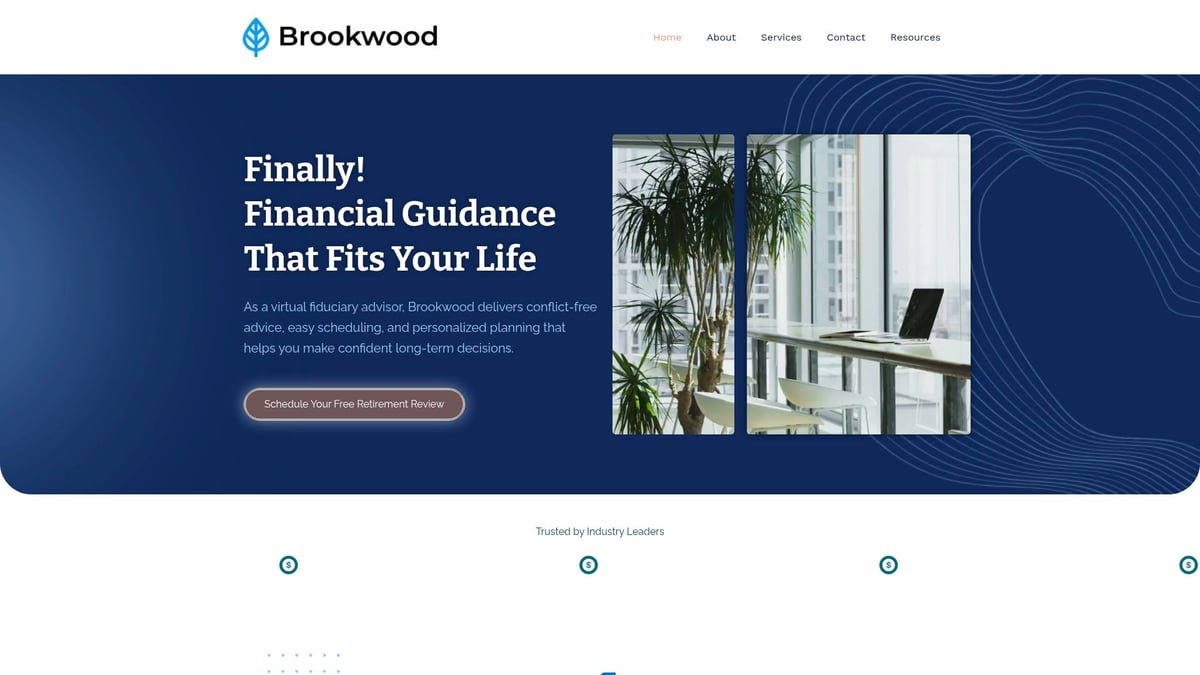
Services include retirement planning, investment management, estate planning, and tax strategies, all tailored to your goals. With no minimum investment required and a clear fee structure, Brookwood leverages technology for accessible and holistic planning. Over 1,000 families nationwide trust their expertise for long-term financial security.
Fiduciary Planning in Action: Real-World Scenarios and Solutions
Fiduciary planning transforms abstract financial principles into practical strategies for everyday life. By applying these standards across retirement, investments, estate, tax, and major transitions, individuals experience measurable benefits. Let us explore how fiduciary planning works in action, using real-world examples to highlight its value.
Retirement Planning Aligned with Your Best Interests
Fiduciary planning ensures retirement strategies are tailored to your unique needs, not shaped by sales incentives. Take, for example, the process of choosing between traditional and Roth retirement accounts. A fiduciary advisor will analyze your tax situation, future income expectations, and withdrawal plans to recommend the optimal path.
Clients benefit from unbiased guidance on Social Security timing and withdrawal strategies. This helps reduce longevity risk and provides peace of mind. With fiduciary planning, all recommendations are grounded in your long-term interests, not product commissions.
Investment Management Without Conflicts
Investment decisions are most effective when they are free from conflicts of interest. Fiduciary planning emphasizes the use of low-cost, diversified funds instead of high-fee proprietary products.
For instance, a case study involving a client portfolio shows lower total expenses and improved transparency when managed under a fiduciary standard. Tactics such as regular rebalancing and tax-loss harvesting further enhance outcomes. If you seek an advisor who prioritizes your interests, explore Comprehensive financial services that align with fiduciary planning principles.
Estate and Legacy Planning
Estate planning is a critical component of fiduciary planning. Fiduciaries help clients create clear wills, trusts, and beneficiary designations, ensuring assets are distributed according to your wishes.
By coordinating with attorneys and tax professionals, fiduciary advisors avoid conflicts of interest during estate settlements. For example, a family working with a fiduciary avoided probate delays by updating documents and integrating tax strategies. This approach provides clarity, reduces stress, and preserves family harmony.
Tax Planning Strategies
Effective tax planning is a hallmark of fiduciary planning. Advisors focus on strategies like asset location, charitable giving, and Roth conversions to minimize tax liability.
Unlike sales-driven approaches, fiduciary planning avoids recommending tax-sheltered products that may not serve your best interests. The real-world impact is clear: clients often see improved after-tax returns and greater preservation of their legacy. For more insights, visit a trusted Comprehensive financial services provider.
Navigating Life Transitions with Fiduciary Guidance
Major life changes require careful, unbiased financial guidance. Fiduciary planning supports clients through events such as divorce, inheritance, business sales, or disability.
For example, after receiving an inheritance, one client relied on fiduciary planning to update their estate documents and protect new assets. Advisors guided them through each step, reducing costly mistakes and ensuring their plan remained aligned with evolving goals. This proactive support is essential for lasting financial security.
Proactive Steps to Secure Your Financial Future in 2026 and Beyond
Taking proactive steps is essential for effective fiduciary planning. By building habits around regular reviews, staying informed, and leveraging technology, you can help protect and grow your wealth. Use these strategies to keep your financial plan aligned with your best interests, no matter what the future brings.
Conduct Regular Fiduciary Check-Ins
One of the most important elements of fiduciary planning is scheduling consistent reviews. Aim to meet with your advisor at least once a year to assess progress toward your financial goals. Review your risk tolerance, investment strategy, and any life changes that could affect your plan.
Create a checklist for these meetings. Update key documents, confirm beneficiaries, and discuss any concerns. Documenting these discussions ensures clear communication and accountability. Regular check-ins help you address issues early and keep your fiduciary planning on track.
Stay Informed About Regulatory and Market Changes
Financial regulations and market conditions evolve, making it vital to stay informed. Understanding how new rules, such as fiduciary regulations, impact your fiduciary planning can help you adapt your strategy. Subscribe to updates from reputable financial news sources and regulatory agencies.
Review industry newsletters or attend webinars to stay current. Discuss potential impacts of regulatory shifts with your advisor. Being proactive allows you to make timely adjustments and ensures your fiduciary planning remains compliant and effective.
Embrace Technology for Transparency and Access
Technology plays a growing role in successful fiduciary planning. Use secure online dashboards to monitor accounts, access real-time reports, and store important documents. Virtual meetings offer flexibility, making it easier to connect with your advisor nationwide.
Leverage digital tools for document sharing and e-signatures. These advancements support transparency and enable efficient collaboration. Embracing technology empowers you to stay engaged and informed, strengthening your fiduciary planning experience.
Empower Yourself Through Financial Education
Continuous learning is key to making informed decisions in fiduciary planning. Take advantage of free guides, webinars, and articles from trusted sources. For example, the Brookwood financial planning blog offers practical insights on fiduciary duty, advisor selection, and financial strategies.
Educate yourself on investment risks, fees, and estate planning basics. Ask questions and seek clarity on any recommendations. The more you know, the better equipped you are to advocate for your best interests in fiduciary planning.
Take Action: Steps to Get Started Today
Begin your fiduciary planning journey by organizing your financial documents and outlining your goals. Use a checklist to prepare for your first advisor meeting. Gather account statements, tax returns, and estate documents.
Schedule an initial consultation with a fiduciary advisor. Prepare questions about their approach, compensation, and fiduciary status. Set calendar reminders for annual reviews and ongoing education. Taking these steps puts you on the path to confident, effective fiduciary planning.
