
Planning for retirement requires understanding the various retirement income sources available to you and how they work together to support your financial needs. As you transition from accumulating wealth to distributing it, having a comprehensive strategy that incorporates multiple income streams becomes essential. The landscape of retirement funding has evolved significantly over recent decades, with fewer traditional pensions and greater responsibility placed on individuals to manage their own financial futures. Knowing which sources apply to your situation and how to optimize each one can make the difference between merely surviving retirement and truly thriving during your golden years.
Social Security Benefits as a Foundation
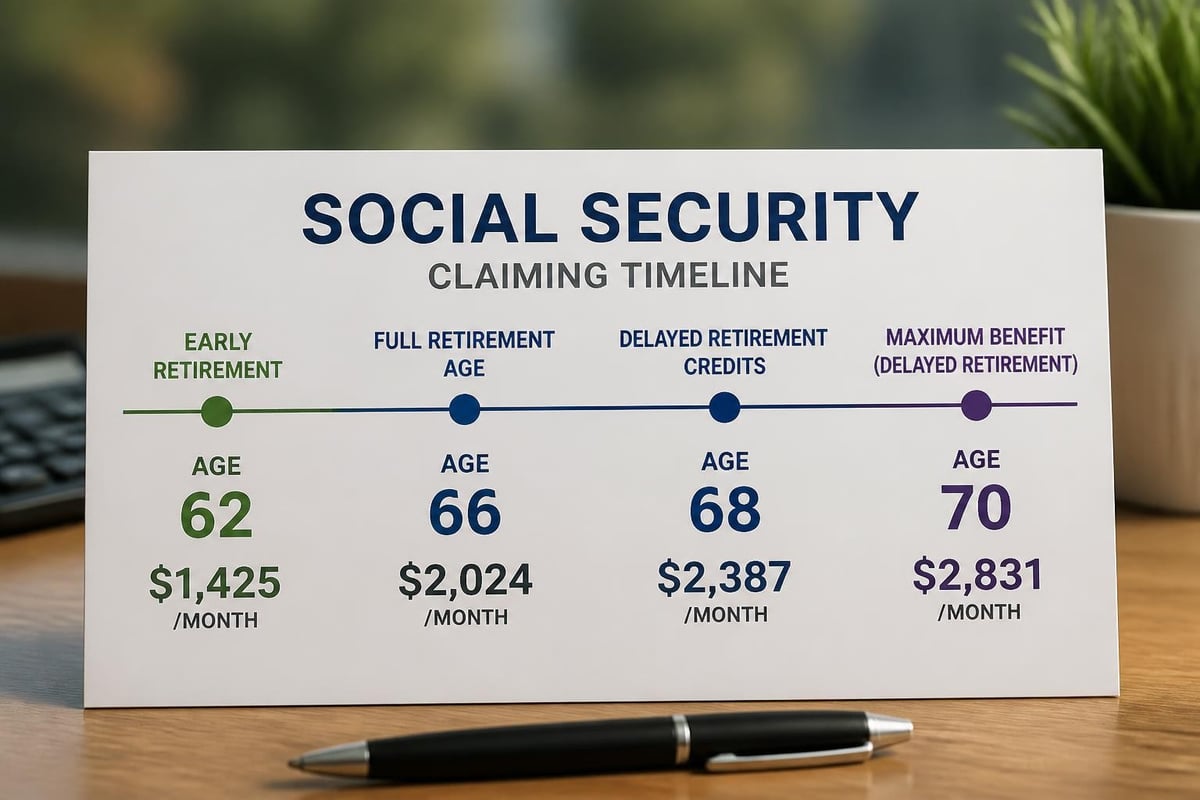
Social Security represents one of the most reliable retirement income sources for millions of Americans. This government-administered program provides monthly payments based on your lifetime earnings and the age at which you choose to claim benefits. You can begin receiving reduced benefits as early as age 62, or you can delay up to age 70 to receive significantly higher monthly payments.
Understanding your Social Security options requires careful analysis of your specific circumstances. The difference between claiming at 62 versus 70 can amount to a 77% increase in monthly benefits, making timing a crucial decision. Understanding the primary sources of retirement income helps you see how Social Security fits into your broader financial picture.
Maximizing Your Social Security Strategy
Several factors influence your optimal claiming strategy:
- Full retirement age (FRA) varies based on your birth year, currently ranging from 66 to 67
- Spousal benefits allow you to claim up to 50% of your spouse's benefit amount
- Survivor benefits provide ongoing income to widows and widowers
- Working while collecting may temporarily reduce benefits if claimed before FRA
- Tax implications affect how much of your benefit you actually keep
Coordinating Social Security with your other retirement income sources can optimize your overall tax situation and ensure sustainable cash flow throughout retirement.
Pension Plans and Defined Benefit Options
Traditional pension plans, also known as defined benefit plans, provide guaranteed monthly payments for life. While less common today than in previous generations, many government employees, teachers, and workers at established corporations still have access to these valuable retirement income sources. If you're fortunate enough to have a pension, understanding your payout options becomes critical.
Most pensions offer several distribution choices. You can typically select between a single life annuity that pays the highest monthly amount but stops when you die, or joint and survivor options that provide reduced payments but continue for your spouse's lifetime. Some plans also offer lump-sum distributions, though this option requires careful consideration of investment responsibility and longevity risk.
| Pension Option | Monthly Payment | Survivor Benefit | Best For |
|---|---|---|---|
| Single Life | Highest amount | None | Single individuals |
| 50% Joint & Survivor | Moderate reduction | 50% continues | Couples with other income |
| 100% Joint & Survivor | Larger reduction | 100% continues | Primary income source |
| Lump Sum | Varies by investment | Depends on estate plan | Investment expertise |
Personal Savings and Investment Accounts
Investment portfolios and personal savings represent increasingly important retirement income sources as traditional pensions become rarer. These accounts include taxable brokerage accounts, certificates of deposit, money market funds, and other investment vehicles you've built throughout your working years.
The challenge with personal savings lies in creating a sustainable withdrawal strategy. Research suggests various approaches, from the traditional 4% rule to more dynamic strategies that adjust based on market conditions and portfolio performance. Effective retirement income strategies emphasize the importance of balancing growth potential with income stability.
Creating Sustainable Withdrawal Strategies
Determining how much you can safely withdraw from personal savings requires analyzing multiple variables:
- Calculate your baseline expenses and distinguish between essential and discretionary spending
- Assess your total portfolio value across all accounts and asset classes
- Determine your withdrawal rate based on longevity expectations and market conditions
- Implement systematic rebalancing to maintain your target asset allocation
- Monitor and adjust annually based on portfolio performance and changing needs
Working with a fiduciary advisor ensures your withdrawal strategy aligns with your long-term goals while managing tax efficiency and sequence of returns risk.
Tax-Deferred Retirement Accounts
Employer-sponsored 401(k) plans, 403(b) plans for nonprofit employees, and traditional IRAs represent crucial retirement income sources for most Americans. These accounts allowed you to defer taxes during your working years while building substantial retirement funds. Now in retirement, understanding the rules governing distributions becomes essential.
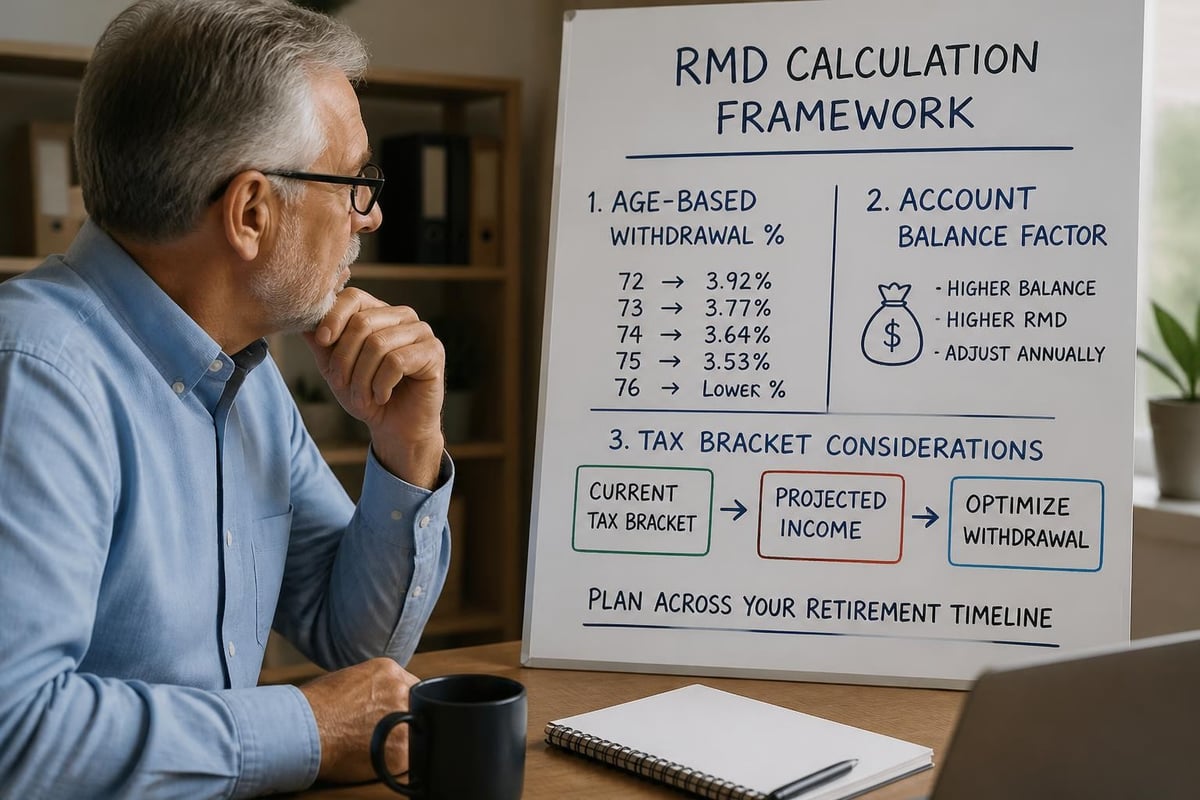
Required Minimum Distributions (RMDs) mandate that you begin withdrawing from these accounts starting at age 73 (as of 2026). The IRS calculates your RMD based on your account balance and life expectancy, with penalties of 25% of the required amount for missed distributions. Strategic planning around these requirements can minimize tax impact while providing necessary income.
Tax-Advantaged Distribution Techniques
Several strategies can optimize your tax-deferred account distributions:
- Roth conversions during lower-income years reduce future RMDs and create tax-free growth
- Qualified Charitable Distributions (QCDs) allow direct transfers to charity, satisfying RMDs without increasing taxable income
- Strategic timing of distributions can keep you in lower tax brackets
- Asset location places tax-inefficient investments in tax-deferred accounts
The interaction between these retirement income sources and your overall tax situation requires careful coordination. Developing comprehensive tax strategies helps you keep more of what you've saved.
Roth IRA Distributions and Tax-Free Income
Roth IRAs provide unique advantages among retirement income sources because qualified distributions come out completely tax-free. Unlike traditional IRAs, Roth accounts don't require RMDs during the original owner's lifetime, offering greater flexibility in retirement planning. This makes them particularly valuable for managing taxable income and creating estate planning opportunities.
To qualify for tax-free treatment, you must be at least 59½ years old and have held the Roth account for at least five years. These distributions don't count toward the taxation of Social Security benefits or affect Medicare premium calculations, providing significant planning advantages.
Annuities and Guaranteed Income Products
Annuities represent another category of retirement income sources that can provide guaranteed lifetime payments. These insurance products convert a lump sum into a stream of income, offering protection against longevity risk. Various types of annuities serve different purposes in retirement planning.
Immediate annuities begin payments right away, while deferred annuities accumulate value before distributions start. Fixed annuities provide predictable payments, whereas variable annuities tie returns to underlying investment performance. Each type involves tradeoffs between guarantees, growth potential, fees, and flexibility.
Key considerations when evaluating annuities:
- Cost structure including surrender charges, mortality and expense fees, and administrative costs
- Financial strength of the issuing insurance company
- Inflation protection through cost-of-living adjustments or increasing payment options
- Liquidity needs and penalties for early withdrawal
- Death benefits and legacy planning implications
Part-Time Work and Earned Income
Many retirees discover that continuing to work part-time serves as both a valuable income source and a source of purpose and social connection. Earned income during retirement can supplement other retirement income sources while allowing investment portfolios more time to grow. This approach has gained popularity as people live longer, healthier lives.
Working during retirement does come with considerations. If you claim Social Security before reaching full retirement age, earnings above certain thresholds temporarily reduce benefits. Additionally, earned income affects Medicare premium calculations through the Income Related Monthly Adjustment Amount (IRMAA).
Balancing Work and Retirement Benefits
Strategic decisions about employment during retirement include:
- Understanding Social Security earnings limits if claiming before FRA
- Evaluating the tax impact of additional income on other retirement income sources
- Considering how earned income affects Medicare costs
- Determining whether continuing employer retirement plan contributions makes sense
- Assessing health insurance options if not yet Medicare-eligible
Real Estate and Rental Income
Real estate investments can provide steady retirement income sources through rental properties or Real Estate Investment Trusts (REITs). Direct property ownership offers potential appreciation and monthly rental income, though it requires active management and involves maintenance responsibilities. REITs provide real estate exposure through publicly traded securities, offering liquidity and professional management.
Rental income from real estate requires careful tax planning. Depreciation deductions can offset rental income, while passive activity loss rules may limit deductibility. Property management, vacancy rates, and maintenance costs all affect net income from real estate investments.

Health Savings Accounts as Retirement Assets
Health Savings Accounts (HSAs) offer unique triple-tax advantages that make them valuable retirement income sources when used strategically. Contributions are tax-deductible, growth is tax-free, and withdrawals for qualified medical expenses come out tax-free at any age. After age 65, you can withdraw HSA funds for any purpose, paying only ordinary income tax similar to traditional IRA distributions.
Given that healthcare represents one of the largest expenses in retirement, having tax-advantaged funds specifically for medical costs provides significant value. Planning for healthcare costs should integrate HSA strategies with your other income sources.
Dividend Income and Interest Payments
Investment income from dividends and interest represents passive retirement income sources that don't require depleting principal. Dividend-paying stocks and bonds can provide regular cash flow while potentially maintaining or growing the underlying asset value. Building a portfolio focused on sustainable income requires analyzing dividend history, payout ratios, and company fundamentals.
Income-focused investment considerations:
| Investment Type | Income Characteristics | Risk Level | Tax Treatment |
|---|---|---|---|
| Dividend Stocks | Variable, potential growth | Moderate to high | Qualified dividend rates |
| Corporate Bonds | Fixed, predictable | Moderate | Ordinary income |
| Municipal Bonds | Fixed, tax-advantaged | Low to moderate | Often tax-exempt |
| Treasury Securities | Fixed, government-backed | Low | State tax-exempt |
Creating reliable income while managing risk requires diversification across sectors, credit qualities, and maturity dates. Investment management strategies should align income generation with your risk tolerance and time horizon.
Reverse Mortgages and Home Equity
For homeowners with substantial equity, reverse mortgages can serve as retirement income sources by converting home value into cash without requiring monthly payments. Available to homeowners 62 and older, these loans provide funds through lump sums, monthly payments, or lines of credit while allowing you to remain in your home.
Reverse mortgages involve complex considerations including fees, interest accumulation, and impacts on estate planning. The loan becomes due when you permanently leave the home, potentially affecting inheritance plans. Alternative strategies like downsizing or home equity lines of credit may better serve some situations.
Coordinating Multiple Income Streams
The art of retirement planning lies in coordinating various retirement income sources to create tax-efficient, sustainable cash flow. Mastering retirement spending strategies involves understanding which accounts to tap first and how to sequence withdrawals for maximum benefit.
A common approach involves covering essential expenses with guaranteed income sources like Social Security and pensions, then using portfolio withdrawals for discretionary spending. This creates a floor of reliable income while maintaining flexibility for variable expenses.
Tax-Efficient Withdrawal Sequencing
Strategic withdrawal ordering typically follows this framework:
- RMDs from tax-deferred accounts to avoid penalties
- Taxable account distributions using appreciated securities for favorable capital gains treatment
- Tax-deferred account withdrawals to fill lower tax brackets
- Roth account distributions preserved for later years or legacy planning
- Emergency reserves from liquid savings for unexpected needs
This sequencing adapts based on individual circumstances, tax law changes, and market conditions. Regular reviews ensure your strategy remains optimized as variables change.
Impact of Inflation on Retirement Income
Inflation erodes purchasing power over time, making it essential to consider how your retirement income sources will maintain value across potentially three decades or more. Social Security includes automatic cost-of-living adjustments, but other income sources may not keep pace with inflation.
Building inflation protection into your retirement plan might involve:
- Maintaining equity exposure for long-term growth potential
- Selecting pension options with inflation adjustments if available
- Considering Treasury Inflation-Protected Securities (TIPS)
- Planning for annual increases in withdrawal amounts
- Diversifying across asset classes with different inflation sensitivities
Adapting Your Strategy Over Time
Retirement income needs evolve throughout your retirement years. Early retirement often involves higher discretionary spending on travel and activities, while later years may see increased healthcare costs but reduced overall expenses. Your withdrawal strategy from various retirement income sources should adapt accordingly.
The transition from the "go-go years" to the "slow-go years" and eventually "no-go years" requires flexibility in your planning approach. Comprehensive financial planning anticipates these changes and builds adaptability into your income strategy.
Regular reviews with your financial advisor help ensure your retirement income sources continue meeting your needs while preserving assets for later years and potential legacy goals. Market volatility, tax law changes, health status shifts, and personal circumstances all warrant periodic strategy adjustments.
Building a sustainable retirement requires understanding and optimizing the various retirement income sources available to you, from Social Security and pensions to personal savings and strategic withdrawal planning. The complexity of coordinating multiple income streams, managing tax efficiency, and adapting to changing circumstances makes professional guidance valuable for most retirees. Brookwood Investment Group LLC provides personalized, fiduciary financial planning that helps you navigate these decisions with confidence, ensuring your retirement income strategy aligns with your unique goals and circumstances throughout your retirement years.
