
Navigating a lincoln financial 401k withdrawal requires careful planning and understanding of complex regulations that govern retirement accounts. Whether you're approaching retirement age, facing a financial emergency, or changing employers, knowing the rules, tax implications, and strategic considerations can help you make informed decisions that protect your long-term financial security. Lincoln Financial Group manages retirement plans for thousands of employers, and understanding their specific withdrawal processes alongside IRS regulations is essential for anyone considering accessing these funds.
Understanding Lincoln Financial 401k Withdrawal Basics
Lincoln Financial administers 401k plans with specific procedures for accessing your retirement savings. The withdrawal process involves multiple layers of rules, from IRS regulations to plan-specific provisions your employer has established. When you initiate a lincoln financial 401k withdrawal, you're triggering both administrative procedures through Lincoln Financial's systems and tax consequences through federal and potentially state authorities.
Eligibility Requirements for Withdrawals
Your ability to take a lincoln financial 401k withdrawal depends primarily on your age, employment status, and the specific terms of your employer's plan. The most common scenarios include:
- Age 59½ or older: You can take penalty-free withdrawals regardless of employment status
- Separation from service: Leaving your employer opens withdrawal options
- Age 55 or older: Special rules apply if you leave your job at this age or later
- Hardship situations: Limited circumstances allow early access with restrictions
- Required Minimum Distributions (RMDs): Mandatory withdrawals begin at age 73 (as of 2026)
The Rule of 55 provides penalty-free access for individuals who separate from their employer during or after the year they turn 55, offering an important exception to standard early withdrawal penalties.
Types of Withdrawals Available
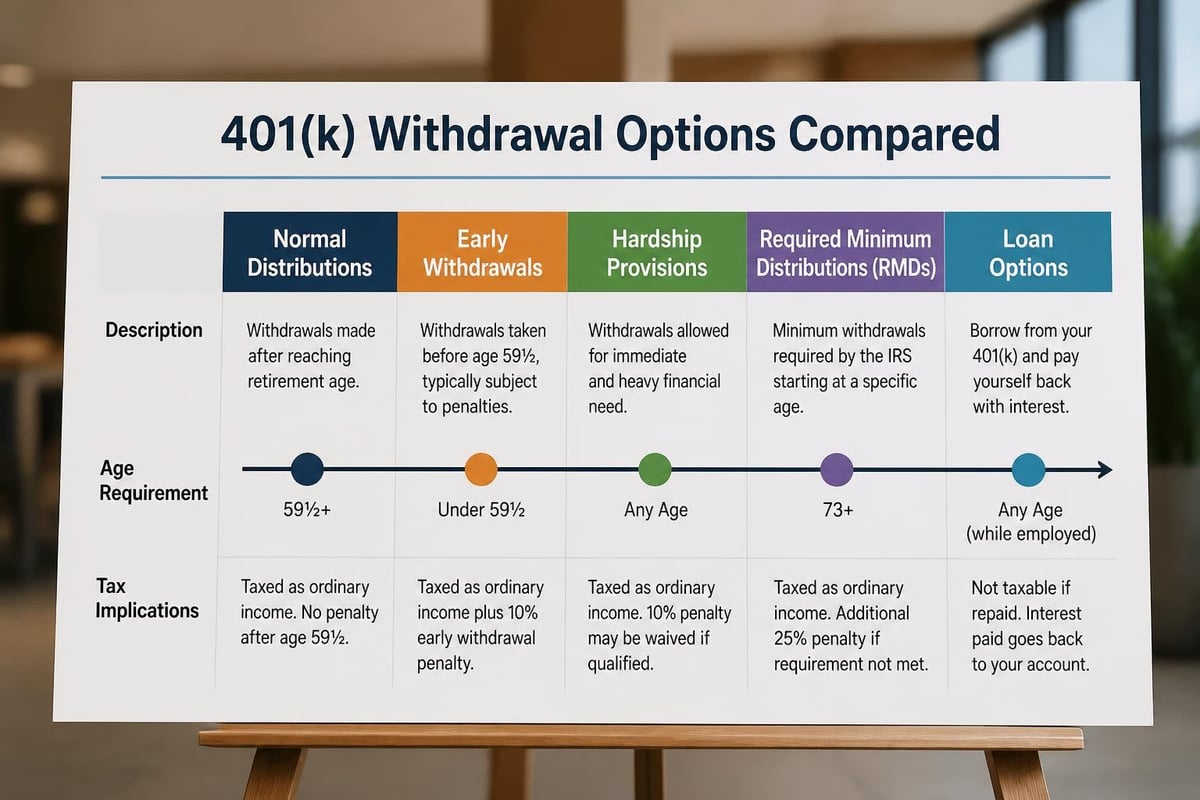
Lincoln Financial 401k plans typically offer several withdrawal methods, each with distinct characteristics:
| Withdrawal Type | When Available | Tax Treatment | Penalties |
|---|---|---|---|
| Normal Distribution | Age 59½+ | Ordinary income tax | None |
| Early Withdrawal | Before 59½ | Ordinary income tax | 10% penalty (with exceptions) |
| Hardship Withdrawal | Financial emergency | Ordinary income tax | 10% penalty, limited amount |
| Required Minimum Distribution | Age 73+ | Ordinary income tax | 50% penalty if missed |
| Loan | While employed | Repayment with interest | None if repaid on time |
The Lincoln Financial 401k Withdrawal Process
Initiating a withdrawal through Lincoln Financial requires navigating their participant portal or working with their customer service representatives. Most lincoln financial 401k withdrawal requests can be completed online through their secure platform, though certain withdrawal types may require additional documentation or spousal consent.
Step-by-Step Withdrawal Procedure
Step 1: Access Your Account
Log into the Lincoln Financial participant website using your credentials. Navigate to the withdrawal or distribution section within your account dashboard.
Step 2: Select Withdrawal Type
Choose the appropriate withdrawal category based on your situation. The system will verify your eligibility based on plan rules and your personal information.
Step 3: Specify Amount and Tax Withholding
Determine how much you want to withdraw and select federal tax withholding preferences. Lincoln Financial typically withholds 20% for federal taxes on eligible rollover distributions unless you opt for a direct rollover.
Step 4: Provide Required Documentation
Submit any necessary paperwork, such as hardship documentation, spousal consent forms, or beneficiary information depending on your withdrawal type.
Step 5: Review and Submit
Confirm all details before finalizing your request. Processing times vary but typically range from 3-10 business days for standard distributions.
Documentation Requirements
Different withdrawal situations require varying levels of documentation. For hardship withdrawals, you'll need to provide evidence of the qualifying event and demonstrate that you've exhausted other available resources. This might include medical bills, eviction notices, tuition statements, or funeral expenses. Working with fiduciary advisors can help ensure you understand documentation requirements and explore alternatives before proceeding.
Tax Implications of Lincoln Financial 401k Withdrawals
Every lincoln financial 401k withdrawal carries tax consequences that significantly impact the net amount you receive. Traditional 401k contributions were made pre-tax, meaning withdrawals are taxed as ordinary income in the year you receive them.
Federal and State Tax Considerations
When you take a distribution, Lincoln Financial will withhold federal income tax unless you specify otherwise or choose a direct rollover. The standard withholding rate is 20% for eligible rollover distributions, but this may not cover your actual tax liability depending on your tax bracket.
Key tax considerations include:
- Withdrawals are added to your taxable income for the year
- Higher income may push you into a higher tax bracket
- State income taxes may apply depending on your residence
- Social Security benefits may become taxable due to increased income
- Medicare premiums could increase based on modified adjusted gross income
Before making a lincoln financial 401k withdrawal, consider consulting with tax professionals who understand the interplay between retirement distributions and your overall tax situation. Understanding 401k fundamentals helps contextualize how these accounts function within your broader financial picture.
Early Withdrawal Penalties
The 10% early withdrawal penalty applies to most distributions taken before age 59½. However, several exceptions exist:
- Separation from service at age 55 or later (for that employer's plan only)
- Substantially equal periodic payments (SEPP) under IRS Rule 72(t)
- Qualified domestic relations order (QDRO) distributions
- Total and permanent disability
- Death (distributions to beneficiaries)
- Certain medical expenses exceeding 7.5% of adjusted gross income
- IRS levy on the plan
- Qualified military reservist distributions

Hardship Withdrawals from Lincoln Financial 401k Plans
Hardship withdrawals represent a limited option for accessing retirement funds during genuine financial emergencies. The IRS defines specific situations that qualify, and your employer's plan must allow hardship withdrawals as a feature. Understanding hardship withdrawal rules helps determine if your situation qualifies and what alternatives might exist.
Qualifying Hardship Events
The IRS permits hardship withdrawals for these immediate and heavy financial needs:
- Medical expenses for you, your spouse, dependents, or primary beneficiary
- Costs directly related to purchasing a principal residence (excluding mortgage payments)
- Tuition and related educational fees for the next 12 months
- Payments necessary to prevent eviction or foreclosure on your principal residence
- Funeral and burial expenses
- Certain expenses to repair damage to your principal residence
Limitations and Restrictions
Hardship withdrawals from your lincoln financial 401k come with strict limitations. You can only withdraw the amount necessary to satisfy the financial need, plus amounts needed to pay taxes and penalties on the distribution. You cannot withdraw employer matching contributions or earnings on your contributions in many plans.
Additionally, some plans may require a suspension of your 401k contributions for six months following a hardship withdrawal, though this is no longer mandated by the IRS as of recent rule changes.
Alternatives to Lincoln Financial 401k Withdrawals
Before proceeding with a lincoln financial 401k withdrawal, explore alternatives that may better preserve your retirement savings while addressing current financial needs. Early withdrawals carry significant long-term costs beyond immediate taxes and penalties.
401k Loan Option
Lincoln Financial plans that offer loan provisions allow you to borrow from your account rather than take a taxable distribution. Taking money from your 401k through loans can provide access to funds without taxes or penalties if you repay according to schedule.
401k loan characteristics:
| Feature | Details |
|---|---|
| Maximum Amount | Lesser of $50,000 or 50% of vested balance |
| Repayment Period | Typically 5 years (longer for principal residence) |
| Interest Rate | Prime rate plus 1-2% (you pay yourself) |
| Repayment Method | Payroll deduction |
| Default Consequences | Treated as taxable distribution plus 10% penalty |
Rollover to IRA
If you've left your employer, rolling your lincoln financial 401k withdrawal into an Individual Retirement Account (IRA) preserves tax-deferral and avoids immediate taxes. Direct rollovers transfer funds between custodians without triggering withholding or tax consequences.
Other Financial Resources
Consider these alternatives before tapping retirement savings:
- Emergency fund reserves
- Home equity lines of credit
- Personal loans from financial institutions
- Assistance programs for specific hardships
- Negotiating payment plans with creditors
- Temporarily reducing 401k contributions to free up cash flow
Working with retirement planning professionals can help you evaluate all available options and understand the long-term implications of each choice.
Required Minimum Distributions from Lincoln Financial 401k Plans
Once you reach age 73 (as of 2026), the IRS requires you to begin taking minimum distributions from your lincoln financial 401k unless you're still working for that employer and don't own 5% or more of the company. These Required Minimum Distributions (RMDs) ensure that tax-deferred retirement accounts eventually generate tax revenue.
Calculating Your RMD
Lincoln Financial calculates your RMD amount based on your account balance as of December 31 of the previous year divided by your life expectancy factor from IRS tables. The calculation becomes more complex if you have multiple retirement accounts or if you're using beneficiary accounts.
RMD planning considerations:
- First RMD can be delayed until April 1 of the year following the year you turn 73
- Missing an RMD incurs a 50% excise tax on the amount not withdrawn
- RMDs count as taxable income and may affect Medicare premiums
- Strategic timing can minimize tax impact when combined with other income sources
- Charitable distributions can satisfy RMDs without increasing taxable income
Understanding key retirement milestone ages helps you plan for RMDs and other age-related retirement account rules.
Strategic Considerations for Lincoln Financial 401k Withdrawals
Timing and structuring your lincoln financial 401k withdrawal strategically can significantly impact your long-term financial outcomes. Consider these factors when planning distributions.
Impact on Long-Term Retirement Security
Every dollar withdrawn from your 401k represents not just the immediate amount but also decades of potential growth lost. A $20,000 withdrawal at age 45 could represent $100,000 or more in lost retirement assets by age 65, assuming reasonable market returns.
Compound growth impact example:
| Age at Withdrawal | Amount Withdrawn | Potential Value at 65 (7% annual return) |
|---|---|---|
| 35 | $10,000 | $76,123 |
| 45 | $10,000 | $38,697 |
| 55 | $10,000 | $19,672 |
Before making withdrawals, experts suggest you think carefully about tapping retirement accounts early and fully understand the opportunity costs involved.
Coordination with Other Retirement Income
If you're taking distributions in retirement, coordinate your lincoln financial 401k withdrawal strategy with Social Security benefits, pension income, and other retirement accounts. The sequence of withdrawals from different account types can substantially affect your lifetime tax burden.
Tax-efficient withdrawal sequencing typically follows this pattern:
- Required minimum distributions from traditional retirement accounts
- Taxable investment account withdrawals (potentially lower capital gains rates)
- Tax-deferred account distributions to fill lower tax brackets
- Roth IRA withdrawals (tax-free) for higher spending years or to manage tax brackets
- Strategic Roth conversions during lower income years

Working with Financial Professionals
Complex withdrawal decisions benefit from professional guidance. Advisors can model different scenarios, project tax consequences, and help you understand how distributions affect your comprehensive financial plan. They can also ensure your lincoln financial 401k withdrawal strategy aligns with your estate planning goals and overall wealth management approach.
Comprehensive retirement planning services evaluate how 401k distributions interact with Social Security optimization, tax planning, healthcare costs, and legacy objectives.
Common Mistakes to Avoid with 401k Withdrawals
Many individuals make costly errors when taking distributions from their retirement accounts. Understanding these pitfalls helps you avoid unnecessary taxes, penalties, and long-term financial setbacks.
Taking Indirect Rollovers
When moving money between retirement accounts, always request a direct trustee-to-trustee transfer rather than receiving a check made payable to you. Indirect rollovers trigger mandatory 20% federal tax withholding, and you must complete the rollover within 60 days to avoid taxes and penalties. You'll need to replace the withheld amount from other sources to avoid a partial taxable distribution.
Ignoring State Tax Consequences
While federal tax rules are uniform, state tax treatment of retirement distributions varies significantly. Some states don't tax retirement income, while others fully tax 401k withdrawals. A few states offer partial exemptions or exclusions. Moving to a tax-friendly state before taking large distributions can generate substantial savings.
Failing to Update Beneficiaries
Before taking distributions, review and update beneficiary designations on your Lincoln Financial 401k account. Outdated beneficiaries can create estate complications and unintended tax consequences for your heirs. Beneficiary designations supersede will instructions, making this a critical estate planning component.
Not Considering the Pros and Cons
Understanding whether a 401k is worth it for your specific situation requires evaluating both advantages and disadvantages. This evaluation becomes particularly important when considering early withdrawals that may undermine the primary benefits these accounts offer.
Special Situations for Lincoln Financial 401k Withdrawals
Certain circumstances create unique withdrawal considerations that require specialized knowledge and planning.
Job Change or Termination
When leaving an employer, you have several options for your lincoln financial 401k:
- Leave the account with Lincoln Financial (if balance exceeds plan minimum)
- Roll over to your new employer's 401k plan
- Roll over to an IRA for broader investment options
- Take a lump-sum distribution (generally discouraged due to tax impact)
The best choice depends on investment options, fees, loan provisions, and your personal circumstances. Many individuals benefit from consolidating multiple retirement accounts into a single IRA for simplified management.
Divorce and QDRO
Qualified Domestic Relations Orders (QDROs) allow division of 401k assets in divorce without triggering early withdrawal penalties. The alternate payee (former spouse) can take immediate distribution without the 10% penalty regardless of age, though income taxes still apply. Proper QDRO preparation requires legal expertise to ensure compliance with both plan requirements and divorce settlement terms.
Disability Considerations
Total and permanent disability creates an exception to early withdrawal penalties. However, proving disability under IRS standards requires substantial documentation. The definition is strict: you must be unable to engage in any substantial gainful activity due to a medically determinable physical or mental impairment expected to last continuously for at least 12 months or result in death.
Inherited 401k Accounts
Beneficiaries who inherit a lincoln financial 401k face different rules than account owners. Non-spouse beneficiaries typically cannot roll inherited 401k assets into their own retirement accounts. Under the SECURE Act, most non-spouse beneficiaries must withdraw the entire balance within 10 years of the account owner's death, though annual RMDs may apply depending on when the owner died.
Maximizing Your Retirement Account Strategy
A comprehensive approach to your lincoln financial 401k withdrawal strategy considers how these accounts fit within your broader financial life. Rather than viewing withdrawals in isolation, integrate them into your overall wealth management plan.
Holistic retirement planning addresses:
- Asset location strategies across taxable, tax-deferred, and tax-free accounts
- Healthcare cost planning including Medicare, long-term care, and Health Savings Accounts
- Social Security claiming strategies that coordinate with withdrawal timing
- Estate planning to maximize wealth transfer efficiency
- Tax planning across multiple years to minimize lifetime tax burden
- Risk management through appropriate insurance coverage
Professional guidance helps navigate the complexity of retirement account rules while ensuring decisions support your unique goals and circumstances. Virtual-first advisory firms offer convenient access to expertise without geographic limitations, making comprehensive planning accessible regardless of your location.
Understanding lincoln financial 401k withdrawal rules empowers you to make informed decisions that protect your retirement security while addressing current financial needs. The complexity of tax laws, penalty exceptions, and strategic considerations makes professional guidance valuable for most individuals facing withdrawal decisions. Brookwood Investment Group provides personalized, fiduciary financial guidance through a virtual-first approach, helping clients navigate retirement planning, tax strategies, and investment management tailored to their unique situations. Schedule a consultation to explore how comprehensive planning can optimize your retirement account strategy and support your long-term financial goals.
