
Moving retirement funds between accounts can be a critical financial decision that impacts your long-term savings strategy. When you're transitioning between jobs or consolidating retirement accounts, understanding how to execute a fidelity direct rollover becomes essential. This type of transfer allows you to move funds from an employer-sponsored retirement plan directly to a Fidelity IRA without triggering immediate tax consequences or penalties. The process involves specific rules, timelines, and procedural steps that require careful attention to maximize your retirement savings while maintaining compliance with IRS regulations.
Understanding the Fidelity Direct Rollover Mechanism
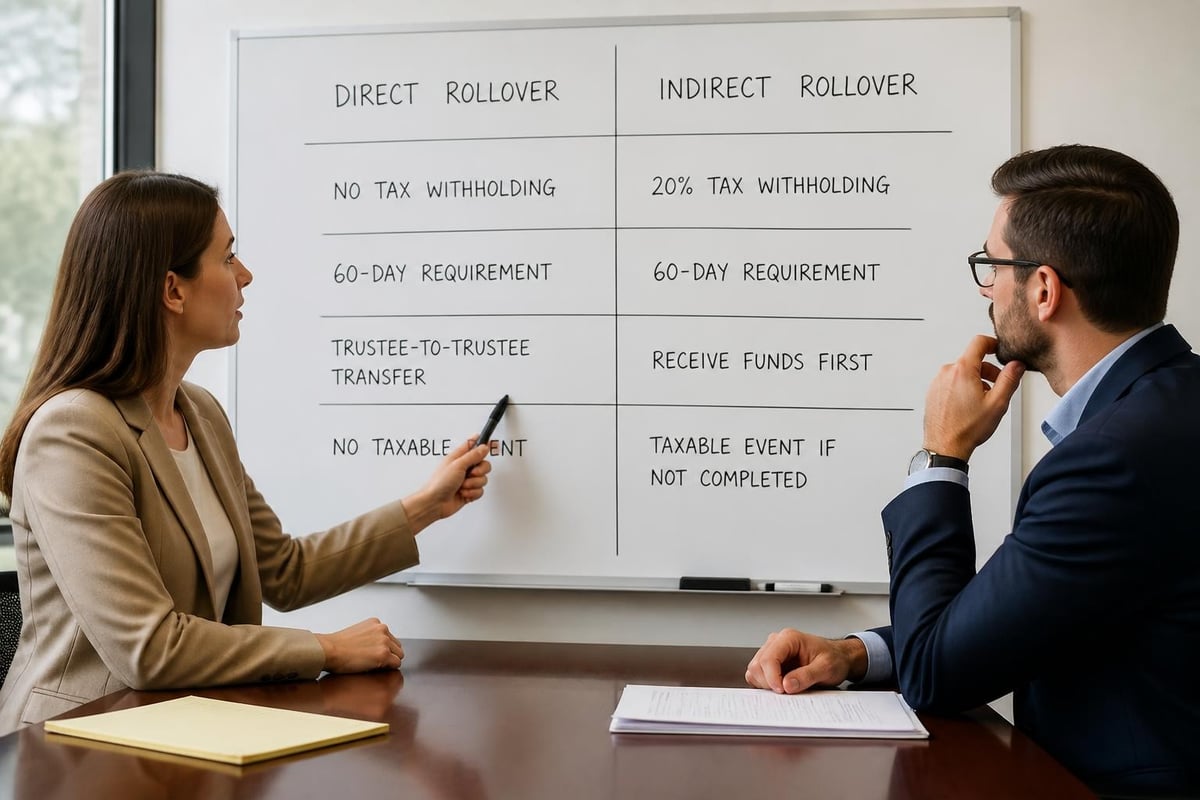
A fidelity direct rollover represents a trustee-to-trustee transfer where funds move directly from your previous employer's retirement plan to a Fidelity IRA account. This method differs significantly from an indirect rollover, where you receive a check and must deposit the funds yourself within a specific timeframe.
The primary advantage of the direct rollover approach centers on avoiding mandatory tax withholding. When you opt for an indirect rollover, your employer must withhold 20% of the distribution for federal taxes. With a direct rollover, no withholding occurs, and your full retirement balance transfers intact.
Key Benefits of Direct Transfer
Tax efficiency stands as the most compelling reason to choose this method. Since funds never touch your hands, the IRS doesn't treat the transaction as a taxable distribution. Your retirement savings continue growing tax-deferred without interruption.
Administrative simplicity makes the fidelity direct rollover attractive for busy professionals. Fidelity handles most of the paperwork coordination with your previous plan administrator, reducing your involvement and potential for errors.
Timing flexibility provides another advantage. Unlike the 60-day deadline imposed on indirect rollovers, direct transfers don't face the same strict timeline pressure, though completing the process efficiently remains advisable.
Eligibility Requirements and Account Options
Not every retirement account qualifies for a fidelity direct rollover. Understanding which accounts work with this transfer method helps you plan effectively and avoid complications.
Qualifying Plan Types
The following retirement accounts typically qualify for direct rollover to a Fidelity IRA:
- Traditional 401(k) plans from previous employers
- 403(b) plans from educational or nonprofit organizations
- 457(b) governmental plans
- Traditional IRAs from other financial institutions
- SIMPLE IRAs (after two-year holding period)
- SEP IRAs from previous employment
Your current employment status matters significantly. Most employers require you to leave the company before initiating a rollover, though some plans permit in-service distributions after reaching age 59½. Reviewing your specific plan’s rollover rules and procedures provides clarity on your eligibility.
Destination Account Selection
When completing a fidelity direct rollover, you'll choose between several IRA types at Fidelity:
| Account Type | Best For | Tax Treatment | Key Consideration |
|---|---|---|---|
| Traditional IRA | Pre-tax 401(k) funds | Tax-deferred growth | Matches original account tax status |
| Roth IRA | Post-tax conversions | Tax-free growth | Requires paying taxes on pre-tax amounts |
| Rollover IRA | Segregated tracking | Tax-deferred growth | Maintains separation from other IRA assets |
Working with personalized financial guidance helps determine which destination account aligns with your retirement strategy and tax planning objectives.
Step-by-Step Process for Completing Your Rollover
Executing a fidelity direct rollover involves coordination between multiple parties. Following these structured steps minimizes delays and ensures accurate processing.
Initial Planning Phase
Step 1: Contact your current plan administrator to request distribution paperwork. Ask specifically about their direct rollover procedures, required forms, and processing timeframes.
Step 2: Open your Fidelity account if you don't already maintain one. This involves completing an application, selecting your investment options, and designating beneficiaries.
Step 3: Gather necessary documentation including your Social Security number, previous employer's plan details, and account statements showing current balances.
Execution Phase
Step 4: Complete Fidelity's rollover request forms with accurate information about your previous plan and desired transfer amount. Fidelity provides detailed instructions and support throughout this stage.
Step 5: Submit distribution paperwork to your former employer's plan administrator, indicating Fidelity as the receiving institution. Include Fidelity's account information and any required documentation.
Step 6: Monitor the transfer progress by maintaining contact with both institutions. Processing typically takes two to four weeks, though timelines vary based on plan administrator efficiency.
The retirement planning process becomes more manageable when you understand each phase and maintain organized records of all communications and submissions.

Tax Implications and Reporting Requirements
Understanding the tax consequences of your fidelity direct rollover prevents surprises during tax season and helps you make informed decisions about account types.
Immediate Tax Consequences
A properly executed direct rollover from a traditional 401(k) to a traditional IRA generates no immediate tax liability. The transfer maintains the tax-deferred status of your retirement funds.
However, converting pre-tax retirement funds to a Roth IRA through a direct rollover creates a taxable event. You'll owe ordinary income taxes on the converted amount in the year of conversion. Considerations before converting to a Roth IRA include your current tax bracket, expected future tax rates, and ability to pay conversion taxes from non-retirement funds.
Form 1099-R and Tax Filing
Your previous plan administrator will issue Form 1099-R documenting the distribution. For a direct rollover, the form should show:
- The distribution amount in Box 1
- A distribution code "G" in Box 7 (indicating direct rollover)
- No taxable amount in Box 2a
You'll report this information on your tax return, but the rolled-over amount won't increase your taxable income. Reviewing rollover tax implications and potential traps helps you avoid common filing mistakes.
Common Challenges and Solutions
Even well-planned rollovers encounter obstacles. Anticipating potential issues helps you respond effectively and keep your transfer on track.
Processing Delays
Plan administrators sometimes take weeks or months to process rollover requests. Contributing factors include:
- Incomplete paperwork or missing signatures
- Unusual plan provisions requiring additional review
- Administrator workload during high-volume periods
- Required medallion signature guarantees for large transfers
Solution approach: Submit complete, accurate paperwork initially, follow up regularly with both institutions, and maintain documentation of all communications.
Outstanding Loan Balances
If you have an outstanding 401(k) loan when leaving your employer, the unpaid balance typically becomes due immediately. Failure to repay triggers tax consequences.
Options include: Repaying the loan before separation, rolling over the non-loan portion while treating the loan as a distribution, or understanding that the outstanding balance becomes taxable income.
Investment Transition Strategies
Your funds may sit uninvested during transfer processing. This cash position creates market exposure risk if stock prices change significantly during the transition period.
| Concern | Strategy | Implementation |
|---|---|---|
| Missing market gains | Time transfers during stable periods | Monitor market conditions before initiating |
| Cash drag on returns | Maintain diversification in existing accounts | Don't liquidate current positions prematurely |
| Reinvestment timing | Establish target allocation before transfer | Pre-select Fidelity investment options |
Working with fiduciary financial advisors provides objective guidance on managing these transition challenges while maintaining alignment with your investment strategy.
Strategic Considerations Before Initiating a Rollover
Not every situation warrants an immediate fidelity direct rollover. Evaluating your personal circumstances helps determine the optimal timing and approach.
Evaluating Your Current 401(k) Plan
Some employer plans offer advantages worth considering before transferring funds. Strong 401(k) plans may provide:
- Institutional pricing on investment options with lower expense ratios than retail equivalents
- Creditor protection that may exceed IRA protections in certain states
- Penalty-free access to funds after age 55 if separated from service (versus age 59½ for IRAs)
- Stable value funds or guaranteed investment contracts unavailable in IRAs
Compare your plan's investment options, fees, and features against what Fidelity offers. The pros and cons of rolling your 401(k) into an IRA vary significantly based on individual plan quality.
Consolidation Benefits
Multiple retirement accounts create administrative complexity and complicate portfolio management. A fidelity direct rollover enables account consolidation, offering several advantages:
Simplified oversight: Managing one account instead of multiple plans reduces time spent tracking investments, reviewing statements, and rebalancing portfolios.
Clearer asset allocation: Consolidated accounts make it easier to maintain your target investment mix across your entire retirement portfolio.
Reduced fees: Eliminating multiple account maintenance fees potentially saves hundreds of dollars annually, particularly if older accounts charge high administrative costs.
Estate planning efficiency: Fewer accounts simplify beneficiary designations and reduce complexity for heirs managing inherited assets.

Investment Options After Your Rollover
Once your fidelity direct rollover completes, you'll access Fidelity's comprehensive investment platform. Understanding your options helps you deploy funds effectively.
Available Investment Categories
Fidelity provides access to diverse investment vehicles:
- Mutual funds including Fidelity-managed funds and thousands of third-party options
- Exchange-traded funds (ETFs) offering low-cost diversification across asset classes
- Individual stocks and bonds for investors seeking direct security ownership
- Target-date funds providing automatic rebalancing based on retirement timeline
- Managed portfolios through Fidelity's advisory services
Your investment selection should reflect your risk tolerance, time horizon, and overall financial plan rather than simply replicating your previous 401(k) holdings.
Rebalancing and Asset Allocation
The rollover presents an opportunity to reassess your investment strategy. Consider these factors when establishing your new allocation:
- Current age and retirement timeline influence appropriate stock-to-bond ratios
- Risk capacity based on overall financial resources beyond retirement accounts
- Income needs during retirement affect allocation to income-generating investments
- Tax efficiency across all accounts, not just the rolled-over IRA
Developing a comprehensive retirement strategy that coordinates your IRA with other financial resources creates a more cohesive approach to wealth management.
Required Minimum Distributions and Rollover Timing
Understanding how rollovers interact with required minimum distribution (RMD) rules prevents compliance issues and potential penalties.
RMD Age Thresholds
As of 2026, RMDs begin at age 73 for individuals born between 1951 and 1959, and age 75 for those born in 1960 or later. Once you reach this threshold, you must withdraw a calculated percentage from traditional IRAs annually.
If you're completing a fidelity direct rollover in the year you reach RMD age, you must satisfy that year's RMD from the original 401(k) before rolling over the remaining balance. You cannot satisfy a 401(k) RMD by taking a distribution from your IRA.
Still Working Exception
An important distinction exists between 401(k) plans and IRAs regarding RMDs. If you continue working past age 73 and don't own more than 5% of the company, you can delay RMDs from your current employer's 401(k) until retirement.
This provision doesn't apply to IRAs. Once you reach RMD age, you must take distributions from traditional IRAs regardless of employment status. This factor may influence whether to execute a fidelity direct rollover while still working or maintain funds in your current employer's plan.
Documentation and Record-Keeping Best Practices
Maintaining thorough records of your fidelity direct rollover protects you during tax filing and provides documentation if questions arise years later.
Essential Documents to Retain
Keep permanent records of the following items:
- Original rollover request forms submitted to both institutions
- Confirmation statements from your previous plan showing distribution
- Fidelity contribution confirmations documenting receipt of funds
- Form 1099-R from the distributing institution
- Tax returns for the year showing rollover reporting
Store these documents in a secure location alongside other important financial records. Digital copies provide additional security against loss or damage.
Tracking Cost Basis
If your 401(k) included after-tax contributions, tracking your cost basis becomes crucial. After-tax contributions can be withdrawn tax-free, but earnings on those contributions remain taxable.
Fidelity maintains records of IRA basis, but providing documentation of after-tax contributions from your 401(k) ensures accurate tracking. This information affects tax calculations on future distributions and conversions.
Multiple Rollover Coordination
If you have retirement accounts at several previous employers, coordinating multiple rollovers requires additional planning.
One-Rollover-Per-Year Rule
The IRS limits IRA-to-IRA rollovers to one per 12-month period. This restriction applies across all IRAs you own, not per account. Violating this rule results in the second distribution being treated as taxable income plus potential early withdrawal penalties.
Important exception: The one-rollover-per-year rule does not apply to direct rollovers from employer plans like 401(k)s to IRAs. You can complete multiple fidelity direct rollovers from different 401(k) plans to your Fidelity IRA within the same year without triggering this limitation.
Sequencing Strategy
When consolidating multiple accounts, consider this approach:
- Start with the largest balance to maximize the impact of improved investment options
- Process one rollover completely before initiating the next to avoid confusion
- Maintain a spreadsheet tracking each rollover's status, contact information, and completion dates
- Allow 30-60 days between initiating separate rollovers to manage cash flow and documentation
Understanding the complete rollover process helps you orchestrate multiple transfers efficiently while maintaining clear records.
When to Seek Professional Guidance
While many individuals successfully complete a fidelity direct rollover independently, certain situations benefit from professional assistance.
Complex Financial Situations
Consider consulting a financial advisor when you face:
- Significant account balances where tax planning becomes critical
- Multiple account types requiring coordination across traditional, Roth, and after-tax components
- Company stock holdings in your 401(k) that may benefit from net unrealized appreciation strategies
- Pending retirement within the next few years requiring integrated income planning
- Estate planning concerns involving beneficiary designations and wealth transfer strategies
A fiduciary advisor provides objective guidance focused on your best interests rather than product sales. Comprehensive financial planning services integrate rollover decisions into your broader financial strategy.
Regulatory Compliance Questions
Tax law complexity surrounding retirement accounts creates potential for costly mistakes. Professional guidance helps when you're uncertain about:
- Tax consequences of Roth conversions
- State-specific creditor protection differences
- Required minimum distribution calculations
- Substantially equal periodic payment arrangements
- Qualified charitable distribution eligibility
The cost of professional advice often proves minimal compared to the potential tax savings and avoided penalties from properly structured rollovers.
Alternative Rollover Destinations
While this article focuses on Fidelity, understanding alternative destinations helps you evaluate whether a fidelity direct rollover represents your best option.
New Employer's 401(k) Plan
If you've started a new job, rolling your old 401(k) into your new employer’s plan offers certain advantages:
- Consolidated retirement savings in one location
- Potential for 401(k) loans from the combined balance
- Continued creditor protection under ERISA
- Delayed RMDs if still working past age 73
Evaluate your new plan's investment options, fees, and provisions before deciding between this approach and an IRA rollover.
Leaving Funds in Your Old 401(k)
For balances exceeding $5,000, most plans allow you to maintain your account after separation. Deciding what to do with an old 401(k) depends on plan quality and your personal preferences.
Reasons to consider leaving funds include:
- Exceptionally low-cost investment options unavailable elsewhere
- Stable value funds providing guaranteed returns
- Age 55 penalty-free withdrawal provisions if separated from service
- Simplicity of maintaining existing investments
Compare these factors against the benefits of a fidelity direct rollover before making your final decision.
Executing a fidelity direct rollover requires careful attention to procedures, tax implications, and strategic considerations that align with your broader retirement goals. The process offers significant advantages in terms of tax efficiency, investment flexibility, and portfolio consolidation when completed correctly. Whether you're changing jobs, retiring, or simply seeking better investment options, understanding the mechanics of direct rollovers empowers you to make informed decisions about your retirement savings. Brookwood Investment Group provides personalized guidance on rollover strategies, investment selection, and comprehensive retirement planning tailored to your unique financial situation and long-term objectives.
