
Converting a traditional pension into a Roth IRA represents a significant financial decision that requires careful planning and strategic consideration. As retirement landscapes evolve and individuals seek greater control over their retirement assets, understanding the mechanics and implications of a pension rollover to Roth IRA becomes increasingly important. This strategy offers potential tax advantages, estate planning benefits, and increased flexibility, but it also comes with immediate tax consequences that must be carefully evaluated within the context of your overall financial picture.
Understanding the Fundamentals of Pension Rollovers
A pension rollover to Roth IRA involves transferring assets from a defined benefit pension plan into a Roth Individual Retirement Account. Unlike traditional pensions that provide guaranteed monthly payments, Roth IRAs offer tax-free growth potential and withdrawal flexibility during retirement.
The rollover process converts pre-tax pension dollars into after-tax Roth IRA assets. This conversion triggers a taxable event, meaning you'll owe income taxes on the full amount rolled over in the year of conversion. However, once inside the Roth IRA, qualified withdrawals become completely tax-free.
Eligibility Requirements
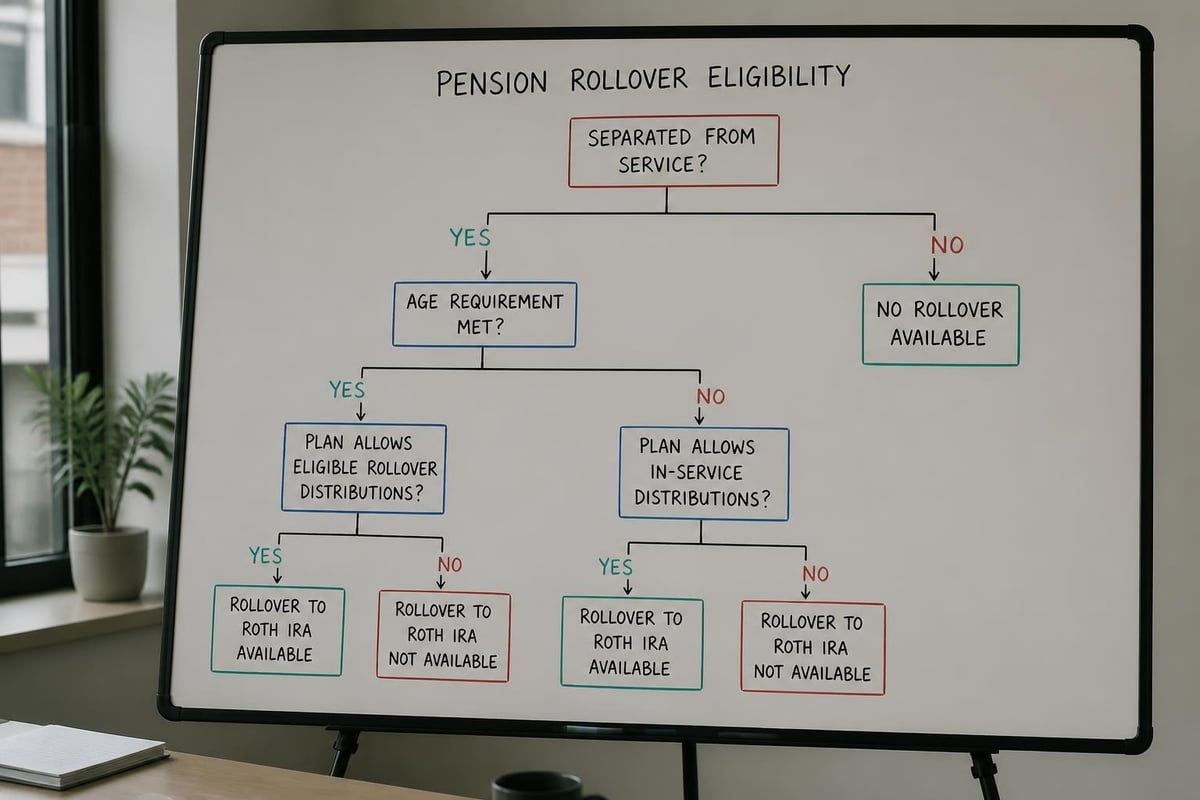
Not all pension plans allow for lump-sum distributions or rollovers. Many traditional defined benefit pensions restrict participants to annuity payments only. Before proceeding, verify your plan's specific provisions regarding distribution options.
Key eligibility factors include:
- Separation from service with the employer sponsoring the pension
- Reaching the plan's specified retirement age
- Plan termination or other qualifying events
- Specific plan document provisions allowing lump-sum distributions
The rollover process requires coordination between your pension plan administrator and the financial institution holding your Roth IRA. Understanding these requirements helps prevent costly mistakes and ensures compliance with IRS regulations.
Two Methods for Executing a Pension Rollover to Roth IRA
When executing a pension rollover to Roth IRA, you have two primary methods available. Each approach carries different procedural requirements and risk levels.
Direct Rollover Method
The direct rollover represents the most straightforward and safest approach. Your pension plan administrator transfers funds directly to your Roth IRA custodian without the money ever touching your hands.
This method eliminates the risk of missing critical deadlines and avoids mandatory withholding requirements. The direct rollover process typically involves completing paperwork with both institutions and coordinating the transfer timeline.
Indirect Rollover Method
An indirect rollover occurs when you receive the pension distribution personally, then deposit it into your Roth IRA within 60 days. This method creates additional complexity and risk.
| Direct Rollover | Indirect Rollover |
|---|---|
| No mandatory withholding | 20% mandatory withholding |
| No 60-day deadline | Strict 60-day window |
| Lower error risk | Higher procedural risk |
| Simpler process | Additional paperwork |
| Recommended approach | Generally avoided |
With indirect rollovers, your pension administrator must withhold 20% for federal taxes. To complete a full rollover, you must replace this withheld amount from personal funds, then reclaim it when filing your tax return.
Tax Implications and Strategic Planning
The tax consequences of a pension rollover to Roth IRA demand careful analysis and strategic timing. This conversion generates ordinary income equal to the full rollover amount, potentially pushing you into higher tax brackets.
Immediate Tax Burden
Converting a $200,000 pension to a Roth IRA creates $200,000 in taxable income for that year. If you're in the 24% federal tax bracket, this conversion alone generates approximately $48,000 in federal income tax liability, plus any applicable state taxes.
Strategic timing considerations include:
- Years with lower-than-normal income
- Before required minimum distributions begin
- Spreading conversions across multiple tax years
- Coordinating with other deductible expenses
- Considering future tax rate projections
The IRS regulations governing these conversions provide specific guidance for federal employees and others with government pensions, though the general principles apply broadly.
Long-Term Tax Benefits
Despite the immediate tax hit, Roth IRAs offer compelling long-term advantages. All qualified withdrawals occur tax-free, including both contributions and earnings. This creates significant value when:
- You expect higher tax rates in retirement
- Your portfolio experiences substantial growth
- You want to minimize required minimum distributions
- Estate planning considerations favor tax-free inheritance
Working with professionals who understand tax strategies helps optimize the timing and structure of your conversion to minimize overall tax liability.

Evaluating Whether a Pension Rollover Makes Sense
A pension rollover to Roth IRA isn't appropriate for everyone. Several factors should inform your decision-making process.
Financial Stability Assessment
Converting a pension requires paying substantial taxes immediately without accessing the converted funds penalty-free until age 59½. You need sufficient non-retirement assets to cover:
- Conversion taxes without touching retirement funds
- Living expenses during the conversion year
- Emergency reserves for unexpected situations
- Other planned expenses within your financial timeline
Comparative Analysis Framework
Compare your pension's guaranteed benefits against the potential advantages of Roth IRA ownership. Consider these factors:
| Pension Benefits | Roth IRA Benefits |
|---|---|
| Guaranteed lifetime income | Investment growth potential |
| No investment risk | Complete control over assets |
| Survivor benefits (if elected) | Flexible withdrawal timing |
| Inflation protection (sometimes) | Estate planning advantages |
| Professional management | Tax-free withdrawals |
Some individuals benefit from professional financial guidance to analyze these tradeoffs within their comprehensive retirement strategy.
Time Horizon Considerations
Roth IRA conversions generally benefit individuals with longer time horizons who can allow the tax-free growth to compound. If you're within five years of needing these funds, the immediate tax cost may outweigh potential benefits.
The five-year rule requires that Roth IRA assets remain in the account for at least five tax years before earnings can be withdrawn tax-free, even after age 59½. Understanding these conversion rules prevents unexpected tax complications.
Special Considerations for 2026 and Beyond
Tax legislation evolves continuously, affecting the calculus of pension rollovers. Current tax rates under the Tax Cuts and Jobs Act are scheduled to sunset after 2025, potentially increasing rates beginning in 2026.
Legislative Environment
Higher future tax rates make current conversions more attractive from a tax arbitrage perspective. Converting at today's rates locks in current tax treatment, potentially saving significant money if rates increase.
However, legislative changes remain uncertain. Some factors to monitor include:
- Proposed changes to Roth IRA regulations
- Potential modifications to conversion rules
- State tax law developments
- Medicare premium implications from increased income
Medicare Premium Considerations
A large pension rollover to Roth IRA increases your modified adjusted gross income (MAGI), potentially triggering higher Medicare Part B and Part D premiums through Income-Related Monthly Adjustment Amounts (IRMAA).
These premium increases apply two years after the conversion year. A $200,000 conversion in 2026 could increase your 2028 Medicare premiums significantly if it pushes you into higher IRMAA brackets.
Implementation Best Practices
Successfully executing a pension rollover to Roth IRA requires attention to procedural details and strategic coordination.
Documentation and Compliance
- Request detailed information about your pension's lump-sum distribution option
- Open a Roth IRA account if you don't already have one
- Complete required rollover paperwork accurately
- Verify that institutions code the transaction correctly
- Maintain comprehensive records for tax reporting
The pension administrator should issue Form 1099-R reporting the distribution, while your Roth IRA custodian should provide documentation confirming the rollover contribution.
Coordinating with Other Retirement Accounts
Many individuals have multiple retirement accounts requiring coordination. Understanding how 401(k) rollovers work provides useful context, as similar principles apply to pension conversions.
Consider whether partial conversions over multiple years might better manage tax liability than a single large conversion. This approach, sometimes called a "Roth conversion ladder," spreads the tax burden across multiple years.

Advanced Strategies for High-Net-Worth Individuals
Individuals with substantial retirement assets may benefit from sophisticated planning techniques that incorporate pension rollovers within broader estate planning strategies.
Estate Planning Integration
Roth IRAs don't require distributions during the owner's lifetime, unlike traditional IRAs subject to required minimum distributions beginning at age 73. This allows wealth to compound tax-free for longer periods.
Beneficiaries inheriting Roth IRAs receive tax-free distributions, creating significant estate planning advantages. While the SECURE Act requires most non-spouse beneficiaries to empty inherited IRAs within 10 years, those withdrawals remain tax-free from Roth accounts.
Multi-Year Conversion Strategies
Rather than converting an entire pension in one year, consider strategic partial conversions. This approach:
- Manages tax bracket creep more effectively
- Provides flexibility to adjust based on changing circumstances
- Reduces Medicare premium spike risk
- Allows course correction if tax laws change
The strategic considerations around Roth conversions apply equally to pension rollovers, with the added complexity of lump-sum distribution timing limitations.
Working with Financial Professionals
The complexity of pension rollover decisions often warrants professional guidance. Fiduciary advisors can provide objective analysis tailored to your specific situation.
What to Look For
When selecting an advisor to help with a pension rollover to Roth IRA, prioritize:
- Fiduciary status: Advisors legally obligated to act in your best interest
- Tax planning expertise: Understanding of current and projected tax implications
- Retirement income planning: Ability to model different distribution scenarios
- Fee transparency: Clear disclosure of all costs and compensation
- Comprehensive approach: Integration with your overall financial plan
Virtual-first advisory firms offer accessible guidance regardless of your location, providing personalized strategies through technology-enabled platforms.
Collaborative Professional Team
Complex conversions may benefit from collaboration between:
- Financial advisors for strategy and investment management
- Tax professionals for detailed tax projections and preparation
- Estate planning attorneys for trust and inheritance considerations
- Pension administrators for accurate distribution processing
This coordinated approach helps identify opportunities and avoid costly mistakes that could undermine your retirement security.
Common Mistakes to Avoid
Several pitfalls can derail pension rollover plans or create unnecessary costs and complications.
Procedural Errors
Frequent mistakes include:
- Missing the 60-day deadline for indirect rollovers
- Failing to replace withheld amounts in indirect rollovers
- Incorrectly coding transactions with IRA custodians
- Overlooking state tax implications
- Underestimating Medicare premium impacts
The detailed regulations governing conversions leave little room for error. Mistakes can result in unexpected taxes, penalties, and lost retirement security.
Strategic Missteps
Beyond procedural errors, strategic mistakes include:
- Converting without adequate funds to pay taxes
- Failing to consider alternative strategies like qualified charitable distributions
- Ignoring the impact on financial aid for college-bound dependents
- Converting in high-income years instead of low-income years
- Not accounting for the five-year rule before needing withdrawals
Understanding Roth conversion timing strategies helps optimize the decision for your specific circumstances.
Alternative Approaches to Consider
Before committing to a full pension rollover to Roth IRA, evaluate whether alternative strategies might better serve your goals.
Hybrid Approaches
Some individuals benefit from combining strategies:
- Keeping a portion of the pension as guaranteed income
- Rolling only part of the pension to a Roth IRA
- Converting to a traditional IRA first, then gradually converting to Roth
- Utilizing qualified longevity annuity contracts within IRAs
Pension Maximization Strategies
If your pension offers survivor benefits at reduced payment levels, pension maximization strategies use life insurance to replace survivor income while taking higher pension payments.
This approach competes with pension rollovers but serves different objectives. Comprehensive retirement planning evaluates all available options to identify the optimal combination for your situation.
A pension rollover to Roth IRA offers powerful benefits for the right individuals under the right circumstances, but requires careful analysis of tax implications, timing considerations, and alignment with your comprehensive financial goals. The complexity of these decisions and the permanent nature of the tax consequences make professional guidance valuable for most individuals considering this strategy. Brookwood Investment Group provides personalized, fiduciary retirement planning and tax strategy guidance to help you evaluate whether a pension rollover aligns with your unique financial situation and long-term objectives.
