
When changing jobs or retiring, the decision about what to do with your employer-sponsored retirement plan requires careful consideration. A direct rollover represents one of the most tax-efficient methods for transferring retirement assets from one qualified plan to another. This transfer method allows you to maintain the tax-advantaged status of your retirement savings while potentially gaining access to broader investment options and consolidated financial management. Understanding the mechanics, benefits, and potential pitfalls of this strategy can help you make informed decisions about your retirement assets.
Understanding the Direct Rollover Process
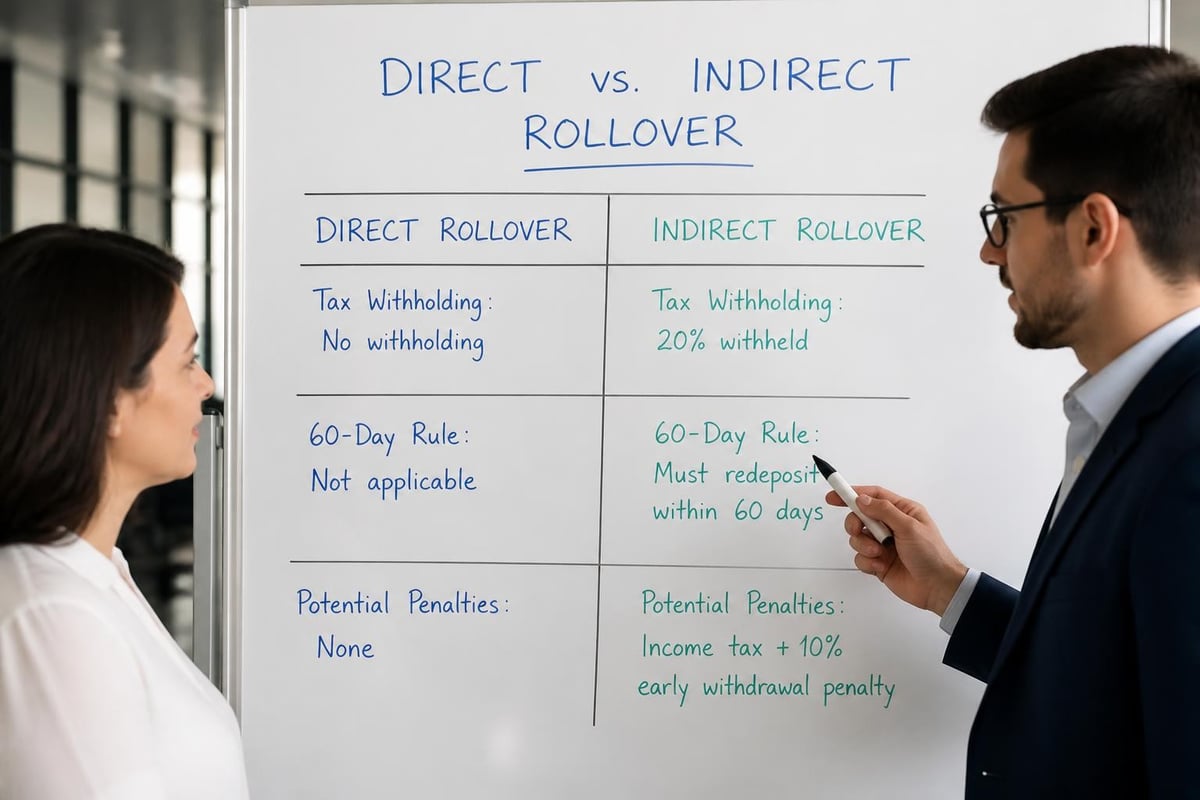
A direct rollover occurs when retirement funds move directly from your employer's plan trustee to another qualified retirement account without you taking possession of the money. This trustee-to-trustee transfer distinguishes it from an indirect rollover, where you receive a check made payable to you and must then deposit it into another retirement account within 60 days.
The primary advantage of choosing a direct rollover stems from its tax treatment. When funds transfer directly between trustees, the IRS does not require mandatory withholding of 20% for federal taxes. This means your entire account balance moves to the new retirement account, preserving the full value of your savings for continued tax-deferred growth.
Key Benefits of Direct Rollovers
The advantages extend beyond simply avoiding immediate taxation. Consider these compelling reasons to choose this transfer method:
- Complete tax deferral with no immediate tax consequences
- Avoidance of mandatory 20% withholding that applies to indirect rollovers
- No 60-day deadline pressure since funds never pass through your hands
- Reduced risk of costly mistakes that could trigger taxes and penalties
- Streamlined documentation with clear paper trails for IRS compliance
According to IRA rollover rules from major financial institutions, the direct rollover method provides the most straightforward path for retirement plan transfers while minimizing administrative burden and tax complications.
Types of Accounts Eligible for Direct Rollover
Not all retirement accounts qualify for this transfer method, and understanding eligibility requirements helps you plan effectively. Traditional 401(k) plans, 403(b) plans, and governmental 457(b) plans typically allow direct rollovers to Individual Retirement Accounts (IRAs) or other employer-sponsored plans.
Common Rollover Scenarios
| Source Account | Destination Account | Tax Considerations |
|---|---|---|
| Traditional 401(k) | Traditional IRA | No immediate taxation |
| Traditional 401(k) | Roth IRA | Taxable conversion |
| Roth 401(k) | Roth IRA | No taxation on qualified transfers |
| 403(b) Plan | Traditional IRA | Tax-deferred continuation |
| 457(b) Plan | Traditional IRA | Maintains tax deferral |
Working with fiduciary advisory services ensures you understand the specific tax implications for your situation. Each account type carries unique characteristics that may affect your long-term financial strategy.
The decision between rolling into an IRA versus another employer plan depends on multiple factors. IRAs often provide expanded investment choices compared to employer plans, but employer plans may offer certain creditor protections and access to institutional-class investments with lower expense ratios.
Step-by-Step Direct Rollover Process
Executing a direct rollover requires attention to detail and coordination between financial institutions. The process typically begins when you leave an employer or decide to consolidate retirement accounts for better management.
Initial Planning Phase
Start by opening your destination retirement account if you don't already have one. Contact the administrator of your current plan to request rollover paperwork. Most plan administrators provide specific forms designed for direct rollovers, which clearly indicate the trustee-to-trustee nature of the transfer.
Review your current plan's distribution options carefully. Some plans allow partial rollovers, enabling you to move only a portion of your balance while leaving the remainder in the employer plan.
Documentation and Execution
- Complete the distribution request form from your current plan administrator
- Specify direct rollover instructions rather than a personal distribution
- Provide your new account information including account number and trustee details
- Verify the receiving institution's requirements for incoming rollovers
- Submit all required documentation with original signatures where needed
- Monitor the transfer timeline which typically takes 2-4 weeks
- Confirm receipt of funds in your new account and verify the amount transferred
The comprehensive 401(k) rollover guide from financial planning resources provides additional details on navigating this process smoothly. Each plan administrator may have slightly different procedures, so confirming specific requirements prevents delays.

Tax Implications and Reporting Requirements
Even though a direct rollover doesn't trigger immediate taxation, you still need to understand reporting obligations. Your former employer will issue Form 1099-R showing the distribution from the original plan. The taxable amount should appear as zero if executed correctly.
Understanding Form 1099-R Codes
The form uses specific distribution codes to indicate the type of transaction. For a direct rollover, you'll typically see code "G" in Box 7, which signals a direct rollover to a qualified plan or IRA. This coding informs the IRS that the distribution qualifies for tax-free treatment.
You must report the rollover on your tax return even though it doesn't generate taxable income. Form 1040 requires you to show the gross distribution and then indicate the rollover, resulting in zero taxable amount. Proper documentation becomes essential if the IRS questions the transaction years later.
Common Mistakes to Avoid
Despite the straightforward nature of direct rollovers, certain errors can create significant complications. Understanding these pitfalls helps you navigate the process successfully.
Mixing Roth and Traditional Funds: Keep Roth 401(k) contributions separate from traditional 401(k) funds. Rolling Roth money into a traditional IRA triggers taxation, while rolling traditional funds into a Roth IRA creates a taxable conversion event. Maintaining the tax character of your contributions preserves their intended tax treatment.
Missing After-Tax Contribution Opportunities: Some 401(k) plans allow after-tax contributions beyond the standard limits. These funds require special handling during rollovers. The after-tax contributions can often move to a Roth IRA without taxation, while the earnings portion must go to a traditional IRA to avoid immediate taxes.
Accepting a Check Payable to You: Even if you intended a direct rollover, receiving a check made payable to you instead of the receiving institution transforms it into an indirect rollover. This triggers the mandatory 20% withholding and starts the 60-day clock. Always verify the check payee before accepting the distribution.
Professional guidance from advisors experienced in retirement planning and estate planning can help you avoid these costly mistakes and optimize your rollover strategy.
Direct Rollover Versus Indirect Rollover
The distinction between these two methods carries significant consequences for your retirement savings. While both accomplish the same goal of moving funds between accounts, the path they take creates vastly different experiences.
Comparative Analysis
| Feature | Direct Rollover | Indirect Rollover |
|---|---|---|
| Tax Withholding | None | Mandatory 20% |
| Time Limit | No deadline | 60 days |
| IRS Reporting | Simpler | More complex |
| Risk Level | Minimal | Higher |
| Completion Rate | Nearly 100% | Variable due to complications |
An indirect rollover requires you to make up the withheld 20% from other sources if you want to roll over your entire balance. Failure to deposit the full amount within 60 days means the portion not rolled over becomes taxable income, potentially subject to an additional 10% early withdrawal penalty if you're under age 59½.
The detailed explanation of direct rollover rules and potential pitfalls emphasizes why financial professionals consistently recommend the direct method over the indirect approach. The reduced complexity and eliminated withholding make it the superior choice for most situations.
Special Considerations for Different Life Stages
Your age and career stage influence how you should approach a direct rollover decision. Young professionals changing jobs may prioritize investment flexibility and low fees, making an IRA rollover attractive. Mid-career professionals might value the option to consolidate multiple old 401(k) accounts into a single IRA for simplified management.
Pre-Retirement Planning
Individuals approaching retirement within five to ten years should consider how a direct rollover fits into their broader financial strategy. Some employer plans offer unique benefits worth preserving, such as the ability to take penalty-free distributions after age 55 if you separate from service.
Questions about pension financial planning often arise during this critical transition period. The coordination between various retirement income sources, including Social Security, pensions, and investment accounts, requires comprehensive planning.

Investment Opportunities After a Rollover
Once your direct rollover completes, you gain access to the investment options available in your new account. IRAs typically offer substantially broader investment choices compared to employer plans, including individual stocks, bonds, mutual funds, exchange-traded funds, and alternative investments.
This expanded universe allows you to implement more sophisticated strategies aligned with your risk tolerance and financial goals. You can construct a customized portfolio rather than selecting from a limited menu of options provided by your former employer.
Portfolio Construction Strategies
Consider these approaches when investing rollover proceeds:
- Asset allocation based on time horizon and risk capacity
- Diversification across asset classes to manage volatility
- Cost-conscious fund selection to minimize expense drag
- Tax-efficient placement of investments across account types
- Regular rebalancing to maintain target allocations
Working with professionals who provide financial planning and investment management services helps you translate your retirement goals into an actionable investment strategy. The coordination between account type selection, asset allocation, and tax planning creates a comprehensive approach to retirement readiness.
Employer Plan Versus IRA: Making the Choice
The decision between rolling into an IRA or transferring to a new employer's plan involves weighing multiple factors. Each option carries distinct advantages that may align differently with your circumstances.
Employer plans sometimes offer access to institutional share classes with lower expense ratios than retail investors can access independently. They may also provide stronger creditor protection in certain states, particularly important for professionals in high-liability occupations.
IRAs counter with greater investment flexibility and the ability to implement sophisticated tax strategies. You can execute Roth conversions more easily, establish backdoor Roth contributions, and access your funds through various distribution methods without plan-specific restrictions.
The analysis of pros and cons when rolling a 401(k) into an IRA provides valuable perspective on these trade-offs. Your decision should reflect your unique financial situation, investment knowledge, and long-term objectives.
Administrative Timing and Coordination
The timeline for completing a direct rollover varies by plan administrator, typically ranging from two to six weeks. Some delays occur due to plan-specific rules, such as requiring multiple signatures or waiting for the end of a trading window.
Managing the Transition Period
During the transfer period, your funds remain uninvested while moving between accounts. This creates market timing risk if equity markets move significantly during the transition. For most investors pursuing long-term strategies, this brief period represents minimal concern compared to the overall decades-long investment horizon.
Plan your rollover timing around significant life events when possible. Avoid initiating transfers during tax season when you might need documentation quickly, or when you're traveling extensively and may have limited access to respond to administrator requests.
Communication between institutions sometimes requires your involvement to resolve discrepancies. Keep detailed records of all correspondence, confirmation numbers, and submitted documentation. This paper trail proves invaluable if questions arise later.
Required Minimum Distributions and Rollovers
If you've reached age 73 (the required minimum distribution age as of 2026), you must take your RMD before executing a direct rollover from an employer plan. The IRS prohibits rolling over RMD amounts, meaning you need to calculate and withdraw the required amount first, then roll over any remaining balance.
This rule applies annually, so timing your rollover around RMD requirements requires careful planning. Missing an RMD triggers a penalty equal to 25% of the amount you should have withdrawn, a costly error that proper planning easily avoids.
Coordination Strategies
Calculate your RMD early in the year to understand exactly how much you must withdraw before initiating a rollover. Some individuals prefer taking their RMD first, then immediately processing the rollover of remaining funds. Others separate the transactions by several weeks to ensure clear documentation of each event.
Resources explaining how to effectively manage old 401(k) accounts often address RMD coordination challenges. Professional guidance becomes particularly valuable when managing multiple accounts with different RMD schedules.
Consolidation Benefits for Long-Term Planning
Many individuals accumulate multiple retirement accounts throughout their careers, leaving old 401(k) plans scattered across former employers. Consolidating these accounts through direct rollovers into a single IRA simplifies management and provides clearer visibility into your overall retirement picture.
Consolidated accounts make rebalancing easier, reduce administrative burden, and help you maintain a cohesive investment strategy. You can implement an integrated approach to tax strategies when all your retirement assets sit within one or two accounts rather than spread across numerous plans.
This consolidation also simplifies required minimum distributions in retirement. Instead of calculating separate RMDs from multiple IRAs, you can aggregate the total RMD and withdraw it from a single account, streamlining your annual tax planning.
State-Specific Considerations
While federal tax treatment remains consistent nationwide, state tax implications can vary. Some states provide additional protections for employer-sponsored retirement plans that may not extend equally to IRAs. Other states offer favorable IRA treatment, exempting them from state income taxes or providing enhanced creditor protection.
Research your state's specific rules, particularly if you live in a state with unique retirement account treatment. States like California, Pennsylvania, and Alabama have particular nuances that might influence your rollover decision. These state-level considerations should factor into your overall evaluation alongside federal tax treatment and investment options.
Documentation and Record Keeping
Maintaining thorough records of your direct rollover protects you if questions arise during future tax audits or distribution planning. Keep copies of all rollover paperwork, including the distribution request, receiving account statements showing the deposit, and Form 1099-R from the distributing plan.
These documents establish the paper trail demonstrating that you properly executed a tax-free rollover rather than taking a taxable distribution. The IRS can question transactions for several years, making long-term record retention essential. Store these documents with other permanent tax records, readily accessible if needed.
Digital copies provide backup protection against loss or damage of physical documents. Scan all rollover-related paperwork and store it securely in cloud storage or encrypted digital archives. This redundancy ensures you can always document your rollover history regardless of physical document conditions.
Understanding direct rollover mechanics, tax implications, and strategic considerations empowers you to make informed decisions about your retirement assets during career transitions. The process, while straightforward when executed properly, benefits from professional guidance to navigate the specific rules and optimize outcomes for your situation. Brookwood Investment Group LLC offers personalized retirement planning services that help you evaluate rollover options within the context of your comprehensive financial strategy, ensuring your decisions align with your long-term goals and unique circumstances.
