
Understanding whether roth ira distributions taxable becomes increasingly important as you approach retirement or face financial emergencies. Unlike traditional IRAs that tax every dollar withdrawn, Roth IRAs offer unique tax advantages-but only when specific conditions are met. The tax treatment of your withdrawals depends on multiple factors including your age, how long you've held the account, and which portion of your Roth IRA you're accessing. Navigating these rules correctly can mean the difference between enjoying completely tax-free retirement income and facing unexpected tax bills plus potential penalties.
How Roth IRA Tax Treatment Differs From Traditional IRAs
Roth IRAs operate on a fundamentally different tax structure compared to traditional retirement accounts. You contribute after-tax dollars today in exchange for tax-free growth and potentially tax-free distributions later. This reverses the traditional IRA model where contributions may be deductible but distributions are fully taxable.
The key advantage lies in the compounding effect. Every dollar of growth in your Roth IRA-whether from stock appreciation, dividends, or interest-can be withdrawn completely tax-free in retirement if you follow the rules. For high-growth investments held over decades, this tax-free treatment on earnings can represent substantial value.
Understanding when roth ira distributions taxable requires distinguishing between two distribution categories:
- Qualified distributions (tax-free and penalty-free)
- Nonqualified distributions (potentially taxable and subject to penalties)
The IRS Publication 590-B provides comprehensive guidance on these distinctions, serving as the authoritative source for distribution rules.
Qualified Distributions: Tax-Free Withdrawals
A qualified distribution from your Roth IRA comes out completely tax-free, regardless of whether you're withdrawing contributions, conversions, or earnings. To qualify, your distribution must satisfy two critical requirements simultaneously.
Age and Five-Year Requirements
First, you must be at least 59½ years old, disabled, using funds for a first-time home purchase (up to $10,000 lifetime), or the distribution must go to your beneficiary after your death. Second, five years must have passed since January 1 of the year you made your first Roth IRA contribution to any Roth IRA you own.
This five-year period starts with your very first Roth contribution, not each individual contribution. Once you satisfy this requirement once, it's satisfied for all future contributions to any Roth IRA you maintain.
| Requirement | Description | Common Exceptions |
|---|---|---|
| Age 59½ | Must reach this age for retirement distributions | Disability, death, first-time home purchase |
| Five-year holding | Count from Jan 1 of first contribution year | None-must be satisfied for earnings to be tax-free |
| Account establishment | Any Roth IRA in your name | Conversions have separate five-year clocks |
Many investors approaching retirement should review their retirement planning strategies to ensure they meet both requirements before taking substantial distributions.

Nonqualified Distributions: When Taxes Apply
When roth ira distributions taxable becomes a reality is during nonqualified distributions. If you withdraw funds before satisfying both qualified distribution requirements, the tax treatment becomes more complex.
The Ordering Rules for Withdrawals
The IRS applies specific ordering rules that determine which dollars come out first. This sequence matters enormously for tax purposes:
- Regular Roth contributions (always tax-free and penalty-free)
- Conversion amounts (tax-free but potentially subject to penalty)
- Earnings (taxable and potentially subject to penalty if nonqualified)
This favorable ordering means you can always access your direct contributions without taxes or penalties, regardless of your age or how long you've held the account. According to Charles Schwab’s guidance on Roth IRA withdrawal rules, this ordering provides valuable flexibility for emergency access to funds.
Taxation of Earnings
If you withdraw earnings before meeting qualified distribution requirements, those earnings are included in your taxable income. Additionally, you'll typically face a 10% early withdrawal penalty unless you qualify for an exception.
Common exceptions to the 10% penalty include:
- Qualified higher education expenses
- Unreimbursed medical expenses exceeding 7.5% of adjusted gross income
- Health insurance premiums while unemployed
- Substantially equal periodic payments
- IRS levy on the IRA
Even with these exceptions, the earnings portion remains taxable as ordinary income. Only qualified distributions allow earnings to emerge completely tax-free.
The Conversion Five-Year Rule
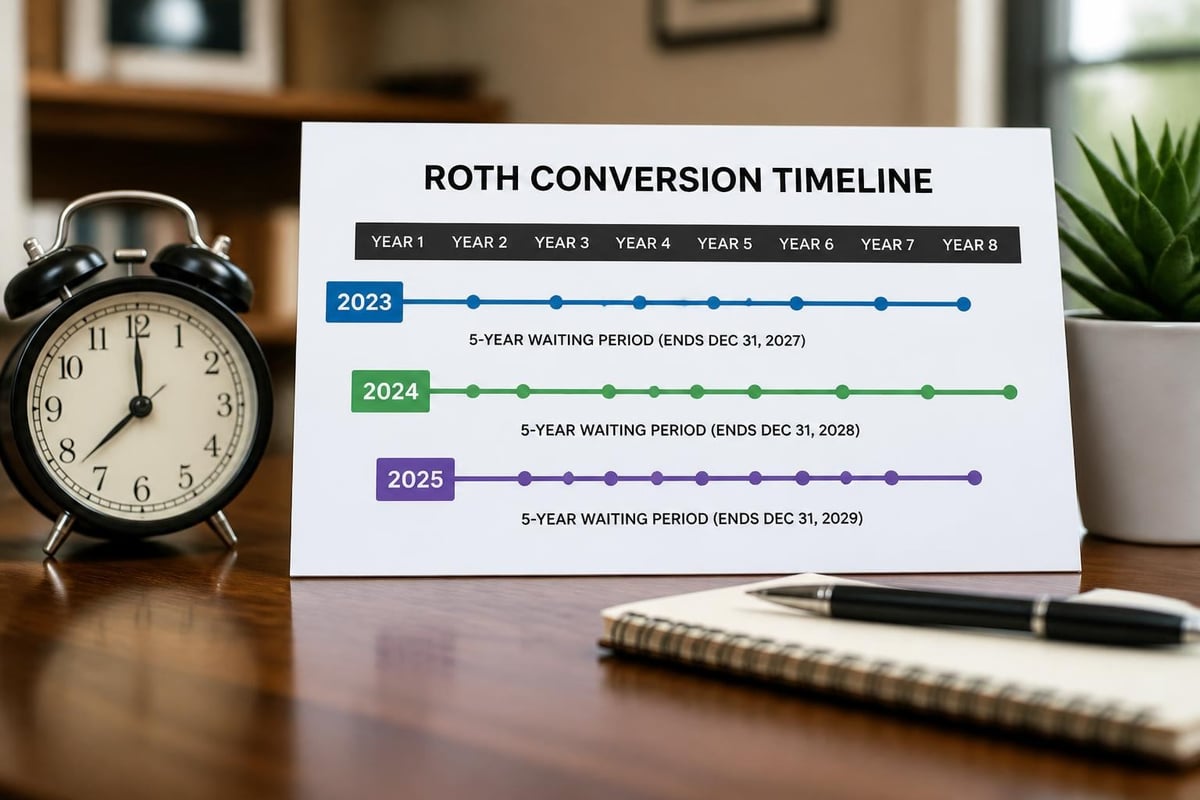
A separate five-year rule applies specifically to Roth conversions, adding another layer of complexity when determining if roth ira distributions taxable. Each conversion starts its own five-year clock, regardless of when you opened your first Roth IRA.
How Conversion Timing Affects Taxes
When you convert traditional IRA funds to a Roth IRA, you pay income tax on the converted amount in the year of conversion. However, if you withdraw those converted dollars before five years have passed since January 1 of the conversion year, you may owe a 10% penalty on the conversion amount-even if you're over 59½.
This rule particularly affects retirees who convert traditional IRA funds in their 60s. The Kiplinger article on the five-year rule explains how multiple conversions can create multiple five-year periods to track.
| Conversion Year | Five-Year Period Starts | Penalty-Free After |
|---|---|---|
| 2022 | January 1, 2022 | January 1, 2027 |
| 2024 | January 1, 2024 | January 1, 2029 |
| 2026 | January 1, 2026 | January 1, 2031 |
If you're over 59½, this penalty doesn't apply to conversions. The conversion five-year rule only affects those under 59½ who might otherwise escape the penalty due to their age.
Planning Strategies to Minimize Taxable Distributions
Strategic planning can help you avoid situations where roth ira distributions taxable unexpectedly. Working with professionals who understand these nuances proves invaluable for optimizing your withdrawal strategy.
Start Your Five-Year Clock Early
Even if retirement seems distant, making a small Roth IRA contribution today starts your five-year clock. This simple action can provide significant flexibility decades later. For 2026, contribution limits are $7,000 for those under 50 and $8,000 for those 50 and older.
Opening a Roth IRA in your 50s ensures you'll satisfy the five-year requirement by your early 60s, maximizing your tax-free withdrawal options. Consider visiting Brookwood’s contact page to discuss whether contributing to a Roth makes sense for your situation.
Coordinate Conversions With Income Planning
Converting traditional IRA funds to Roth during low-income years can minimize the immediate tax hit. Retirees who stop working before claiming Social Security often have a window of lower income where conversions make economic sense.
The Illinois CPA Society discusses Roth conversion strategies particularly relevant for higher earners who want to build tax-free retirement income. However, remember each conversion starts a new five-year penalty clock.
Document Your Basis
Maintaining accurate records of your contributions and conversions prevents confusion about whether withdrawals are taxable. Keep Form 5498 (IRA Contribution Information) and Form 1099-R (Distributions from Pensions, Annuities, Retirement Plans, etc.) for every year.
For conversions, retain documentation showing the amount converted and taxes paid. This paperwork proves which portions of your Roth IRA have already been taxed, protecting you if questions arise during audits.
Special Situations and Exceptions
Several scenarios create unique considerations for determining if roth ira distributions taxable. Understanding these edge cases helps avoid costly mistakes.
Inherited Roth IRAs
Beneficiaries who inherit Roth IRAs face different rules than original owners. If the original owner satisfied the five-year holding requirement before death, beneficiary distributions are qualified and tax-free. However, if the original owner hadn't satisfied the five-year rule, beneficiaries must wait until that period completes for earnings to be tax-free.
The IRS Topic No. 309 clarifies these inherited Roth IRA rules. Non-spouse beneficiaries must generally deplete inherited Roth IRAs within 10 years under current law, but these distributions remain tax-free if qualified.
Recharacterizations and Corrections
If you discover you exceeded income limits for Roth contributions, you may need to recharacterize contributions as traditional IRA contributions. The earnings attributed to the excess contribution would be taxable in the year earned, even if removed before the tax deadline.
Key correction scenarios include:
- Excess contributions requiring removal
- Failed Roth conversions due to income limits (note: income limits for conversions were eliminated in 2010)
- Mistaken distributions requiring return to the account
Substantially Equal Periodic Payments
The 72(t) exception allows penalty-free early distributions if you take substantially equal periodic payments over your life expectancy. This complex exception requires careful calculation and commitment to the payment schedule. Vanguard’s IRA withdrawal guide provides detailed information on implementing this strategy correctly.
For Roth IRAs, this exception typically applies only to earnings distributions, since contributions and conversions follow different rules. Most investors find simpler approaches by accessing contributions first.

Tax Reporting Requirements
Even when roth ira distributions taxable doesn't apply to your situation, you still have reporting obligations. Understanding these requirements ensures compliance and avoids IRS scrutiny.
Form 1099-R and Form 8606
Your Roth IRA custodian will issue Form 1099-R for any distribution. Box 7 uses distribution codes indicating the type of withdrawal. Code J indicates a normal distribution, while code T indicates a distribution that may be subject to penalty.
Form 8606 tracks your basis in Roth IRAs, though it's less critical than for nondeductible traditional IRA contributions since Roth contributions are always made with after-tax dollars. However, if you receive a nonqualified distribution including earnings, you'll need Form 8606 to calculate the taxable portion.
Common Reporting Errors
Many taxpayers incorrectly report qualified Roth distributions as taxable income. If you receive a Form 1099-R from your Roth IRA showing a distribution when you're over 59½ and have satisfied the five-year rule, verify that the taxable amount (Box 2a) is blank or zero.
Your tax preparer or software should recognize qualified distributions based on the codes, but reviewing these forms yourself provides an extra layer of protection. Professional guidance from advisors who specialize in tax strategies can identify reporting errors before filing.
Comparing Roth and Traditional Distribution Tax Treatment
The fundamental difference between Roth and traditional retirement accounts becomes most apparent during the distribution phase. While traditional IRA distributions are almost always fully taxable as ordinary income, qualified Roth distributions escape taxation entirely.
This distinction affects retirement income planning significantly. Retirees with substantial traditional IRA balances may face higher tax brackets as required minimum distributions (RMDs) push income upward. Roth IRAs have no RMDs during the original owner's lifetime, offering greater control over taxable income.
Tax comparison table:
| Account Type | Contribution Tax Treatment | Growth Tax Treatment | Distribution Tax Treatment | RMDs Required |
|---|---|---|---|---|
| Traditional IRA | May be deductible | Tax-deferred | Fully taxable as ordinary income | Yes, starting age 73 |
| Roth IRA | After-tax (not deductible) | Tax-free | Tax-free if qualified | No (for original owner) |
The Tax Foundation’s analysis of retirement account taxation examines the broader policy implications of these different tax treatments. For individuals, the choice between traditional and Roth often depends on expected future tax rates and income needs.
Impact on Medicare and Social Security
Even when roth ira distributions taxable doesn't apply, understanding the broader financial implications matters. Qualified Roth distributions don't count as income for Medicare premium calculations (IRMAA) or Social Security taxation determinations, while traditional IRA distributions do.
This creates strategic opportunities. Retirees can use Roth distributions to meet spending needs without pushing themselves into higher Medicare premium brackets. Similarly, keeping adjusted gross income lower through Roth withdrawals rather than traditional IRA distributions may reduce the percentage of Social Security benefits subject to taxation.
These considerations grow more important as account balances increase. Working with fiduciary financial advisors who can model different distribution scenarios helps identify the most tax-efficient withdrawal sequence across all your retirement accounts.
State Tax Considerations
While federal tax treatment of Roth IRA distributions follows consistent rules nationwide, state taxation varies. Most states that impose income tax follow federal treatment, making qualified Roth distributions tax-free at both levels.
However, a few states impose their own rules. Some states that don't have income tax (like Florida, Texas, and Nevada) obviously don't tax any distributions. Others may treat certain conversions or distributions differently than federal law.
Before making substantial Roth conversions or distributions, verify your state's specific rules. This becomes particularly important if you're considering relocating in retirement to a different state, as this could affect the long-term tax efficiency of your Roth strategy.
Working With Financial Professionals
Determining whether roth ira distributions taxable in your specific circumstances often requires professional guidance. The interaction of contribution limits, income phaseouts, conversion strategies, and distribution rules creates complexity that personalized advice can clarify.
Financial advisors can model different scenarios showing how distribution timing affects your lifetime tax bill. They can identify optimal years for Roth conversions based on your income fluctuations and coordinate distribution strategies with Social Security claiming decisions, Medicare planning, and estate considerations.
According to Fidelity’s guidance on IRA withdrawals, coordinating these moving parts requires understanding how each decision affects the others. Comprehensive investment management incorporates tax-efficient distribution planning as a core component of retirement success.
Understanding when Roth IRA distributions are taxable versus tax-free represents a critical component of retirement planning that can significantly impact your long-term financial security. By satisfying the qualified distribution requirements and carefully timing withdrawals, you can maximize the tax advantages that Roth accounts offer. Brookwood Investment Group LLC provides personalized financial guidance on retirement planning and tax strategies, helping clients navigate these complex rules and develop customized distribution plans aligned with their unique financial goals. Schedule a consultation to explore how strategic Roth IRA management can enhance your retirement income strategy.
