
Navigating the complexities of retirement savings often involves understanding when and how you can access your funds without facing significant financial setbacks. For educators, healthcare workers, and employees of nonprofit organizations, 403(b) retirement plans represent a cornerstone of long-term financial security. However, life circumstances sometimes require accessing these funds before retirement age. Understanding the rules, penalties, and potential exceptions surrounding a 403b early withdrawal can help you make informed decisions that align with your financial situation while minimizing unnecessary tax consequences.
Understanding 403(b) Plan Withdrawal Rules
A 403(b) plan, also known as a tax-sheltered annuity (TSA), provides tax-advantaged retirement savings for employees of public schools, certain nonprofit organizations, and churches. The IRS maintains specific regulations about 403(b) plans that govern when and how you can access your money.
The fundamental rule governing 403b early withdrawal centers on age 59½. This threshold represents the age at which you can typically take distributions from your 403(b) without incurring the IRS's additional 10% penalty tax. However, this doesn't mean the money comes out tax-free. Regular income taxes still apply to pre-tax contributions and earnings.
What Constitutes an Early Withdrawal
An early withdrawal occurs when you take money from your 403(b) before reaching age 59½. The IRS views these distributions as premature access to retirement funds, and consequently, imposes additional penalties to discourage the practice. This approach aims to preserve retirement security by making early access financially costly.
Key characteristics of early withdrawals include:
- Subject to ordinary income tax at your current tax rate
- Additional 10% penalty tax on the withdrawn amount
- Mandatory 20% federal tax withholding for most distributions
- Potential state tax implications depending on your residence
- Permanent reduction in retirement savings and compound growth
When you initiate a 403b early withdrawal, your plan administrator will withhold 20% for federal taxes automatically. You'll receive the remaining 80%, but you're still responsible for the full tax liability when filing your return.
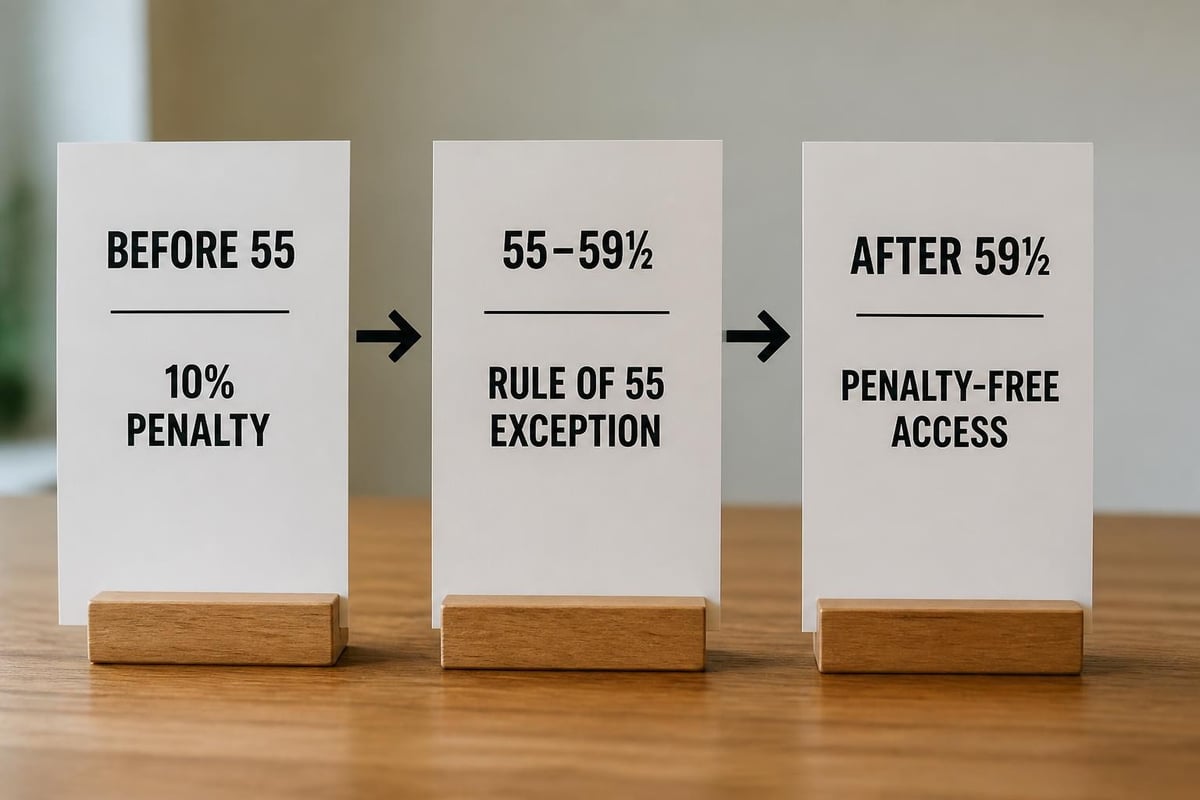
The 10% Early Withdrawal Penalty Explained
The additional 10% penalty represents a significant cost beyond regular income taxes. For example, if you withdraw $30,000 from your 403(b) at age 45 and fall in the 22% federal tax bracket, you'll face substantial tax consequences.
| Component | Amount | Calculation |
|---|---|---|
| Withdrawal Amount | $30,000 | Base amount |
| Federal Income Tax (22%) | $6,600 | $30,000 × 0.22 |
| Early Withdrawal Penalty (10%) | $3,000 | $30,000 × 0.10 |
| Total Tax Liability | $9,600 | 32% effective rate |
| Net Proceeds | $20,400 | After all taxes |
This example demonstrates how a 403b early withdrawal can result in losing nearly one-third of your money to taxes and penalties. The IRS provides detailed guidance on pension distributions and tax treatment that explains these calculations in greater depth.
Qualified Exceptions to the Early Withdrawal Penalty
While the 10% penalty applies broadly, the IRS recognizes specific circumstances where accessing retirement funds early makes sense. Understanding these exceptions can potentially save thousands in penalties while still providing necessary access to your money.
Separation from Service After Age 55
The Rule of 55 represents one of the most useful exceptions for individuals approaching traditional retirement age. If you separate from your employer during or after the calendar year you turn 55, you may take penalty-free distributions from that employer's 403(b) plan. Fidelity provides comprehensive guidance on the Rule of 55 and its application.
Important considerations for the Rule of 55:
- Applies only to the plan with your most recent employer
- Must leave employment at age 55 or older
- Does not apply to IRA rollovers from that 403(b)
- Regular income taxes still apply
- Public safety employees may qualify at age 50
Substantially Equal Periodic Payments (SEPP)
The SEPP exception, also known as 72(t) distributions, allows penalty-free withdrawals if you commit to taking substantially equal periodic payments for at least five years or until age 59½, whichever is longer. This strategy requires careful planning and strict adherence to IRS guidelines.
The IRS approves three calculation methods for determining payment amounts: the required minimum distribution method, the amortization method, and the annuitization method. Each produces different payment amounts, and once you begin, modifying the payment schedule triggers retroactive penalties.
Medical and Disability Exceptions
Healthcare costs and disability represent two areas where the IRS provides penalty relief. For unreimbursed medical expenses, you can withdraw penalty-free amounts exceeding 7.5% of your adjusted gross income for the year. This exception doesn't require itemizing deductions, though the threshold remains substantial.
Total and permanent disability provides another exception. If you cannot engage in any substantial gainful activity due to a physical or mental condition expected to result in death or last indefinitely, distributions become penalty-free.
Other Qualified Exceptions
Additional circumstances that may exempt you from the 10% penalty include:
- IRS levy – Distributions due to an IRS levy on your plan
- Qualified domestic relations order – Payments to an alternate payee under a QDRO
- Death – Distributions to beneficiaries after the account holder's death
- Reservist distributions – For qualified military reservists called to active duty
AARP outlines various exceptions to early withdrawal penalties that have evolved through recent legislative changes.

Hardship Withdrawals vs. Early Distributions
Many 403(b) plans offer hardship withdrawal provisions that allow you to access money for immediate and heavy financial needs. However, hardship withdrawals don't automatically eliminate the 10% early withdrawal penalty unless you also qualify for one of the penalty exceptions discussed above.
Hardship Withdrawal Requirements
To qualify for a hardship withdrawal, you must demonstrate an immediate and heavy financial need, and the withdrawal must not exceed the amount necessary to satisfy that need. The IRS defines specific hardship categories.
Approved hardship reasons include:
- Medical expenses for you, your spouse, or dependents
- Costs directly related to purchasing your principal residence
- Tuition and related educational expenses for the next 12 months
- Payments to prevent eviction or foreclosure on your principal residence
- Funeral expenses for family members
- Certain expenses to repair damage to your principal residence
Even when your plan approves a hardship withdrawal for one of these reasons, you'll still face the 10% penalty unless you separately qualify for a penalty exception. Regular income taxes always apply to pre-tax contributions and earnings.
Tax Reporting and Withholding Requirements
Understanding the tax reporting process for a 403b early withdrawal helps you prepare for the financial impact and avoid surprises at tax time. Your plan administrator will send you Form 1099-R, which reports all distributions from retirement accounts. TurboTax explains Form 1099-R and distribution codes that appear on this critical tax document.
Form 1099-R Distribution Codes
Box 7 on Form 1099-R contains a distribution code indicating the type of distribution and whether penalties may apply. Common codes for early withdrawals include:
| Code | Distribution Type | Penalty Applies? |
|---|---|---|
| 1 | Early distribution, no known exception | Yes (10%) |
| 2 | Early distribution, exception applies | No |
| 3 | Disability | No |
| 4 | Death | No |
The distribution code helps you and your tax preparer understand the tax treatment and whether additional penalty taxes apply when preparing your return.
Withholding and Estimated Taxes
Most 403b early withdrawal distributions trigger automatic 20% federal withholding. If your actual tax liability exceeds this amount, you'll owe additional taxes when filing your return. Conversely, if withholding exceeds your liability, you'll receive a refund.
State tax withholding varies by jurisdiction. Some states mandate withholding on retirement distributions, while others make it optional or don't tax retirement income at all.
Alternatives to Consider Before Taking an Early Withdrawal
Before initiating a 403b early withdrawal, exploring alternatives can help preserve your retirement security while addressing immediate financial needs. Working with fiduciary advisors at firms like Brookwood Investment Group can help you evaluate options tailored to your specific situation.
403(b) Loan Provisions
Many 403(b) plans offer loan provisions allowing you to borrow from your account balance without taxes or penalties. Loans must be repaid with interest, but you're essentially paying yourself back rather than losing money to penalties and taxes.
403(b) loan characteristics:
- Maximum loan: Lesser of $50,000 or 50% of vested balance
- Typical repayment period: Five years (longer for home purchases)
- Interest rates: Usually prime rate plus 1-2%
- Repayment: Through payroll deduction
- Risk: Loan becomes taxable distribution if you leave employment
While loans avoid immediate tax consequences, they reduce your account's growth potential and create repayment obligations that could strain your budget.
Roth Conversion Strategies
Converting traditional 403(b) assets to a Roth IRA creates different access opportunities. While you'll pay income taxes on the converted amount, Roth IRA contributions (not earnings) can be withdrawn anytime without taxes or penalties. This strategy requires careful planning and typically makes sense only within a comprehensive retirement planning framework.
Emergency Funds and Other Resources
Building adequate emergency savings before retirement represents the most effective way to avoid needing a 403b early withdrawal. Financial advisors typically recommend three to six months of expenses in accessible savings accounts.
Additional resources to explore before tapping retirement funds include:
- Home equity lines of credit
- Personal loans from banks or credit unions
- Assistance programs for specific needs (medical, housing, education)
- Family loans with documented repayment terms
- Reduction of discretionary expenses
The SEC provides investor guidance on 403(b) plans that can help you understand all features of your plan before making withdrawal decisions.
Rollovers and Plan Transfers
When changing employers or retiring, you face decisions about what to do with your 403(b) assets. Direct rollovers to another qualified plan or IRA avoid taxes and penalties while maintaining tax-deferred growth. However, rolling assets to an IRA eliminates access to certain exceptions like the Rule of 55.
Direct vs. Indirect Rollovers
A direct rollover involves transferring funds directly between plan administrators, with no money paid to you. This method avoids withholding and prevents potential taxes and penalties. Indirect rollovers involve receiving the distribution yourself and depositing it into another qualified account within 60 days.
Direct rollover advantages:
- No mandatory 20% withholding
- No risk of missing the 60-day deadline
- Simpler process with less paperwork
- Eliminates potential tax complications
The CFP Board provides fiduciary guidance on rollover decisions that emphasizes comprehensive analysis rather than product-focused recommendations.

Long-Term Impact of Early Withdrawals
The immediate tax and penalty costs of a 403b early withdrawal represent only part of the total financial impact. Removing money from your retirement account eliminates future compound growth that would have accumulated over decades.
Opportunity Cost Analysis
Consider a $25,000 withdrawal at age 40. Beyond the immediate tax consequences, you forfeit the growth that money would have generated over 25 years until retirement at age 65.
| Scenario | Growth Rate | Value at 65 | Opportunity Cost |
|---|---|---|---|
| Money remains invested | 6% annually | $107,297 | N/A |
| After-tax proceeds reinvested | 6% annually | $64,378 | $42,919 |
| Money spent, not reinvested | N/A | $0 | $107,297 |
These calculations demonstrate how early withdrawals compound their damage through both immediate penalties and lost growth opportunity. The actual impact depends on investment returns, which can vary significantly.
Retirement Security Considerations
Every dollar withdrawn early represents permanent retirement income reduction. Social Security typically replaces only about 40% of pre-retirement income for average earners, making personal savings critical for maintaining your lifestyle in retirement.
Working with financial advisors who specialize in retirement planning helps you understand how withdrawal decisions affect your long-term security and explore strategies to minimize damage when withdrawals become necessary.
Strategic Planning for Potential Early Access Needs
Rather than making reactive withdrawal decisions during financial emergencies, proactive planning creates frameworks for addressing potential needs while protecting retirement security. This approach involves understanding your plan's provisions, evaluating exception eligibility, and creating contingency strategies.
Plan Document Review
Your 403(b) plan document contains specific provisions governing withdrawals, loans, and hardship distributions. Plans vary significantly in their rules, even while operating within IRS guidelines. Understanding your specific plan's provisions enables better decision-making when needs arise.
Key provisions to review:
- Available loan amounts and repayment terms
- Hardship withdrawal procedures and documentation requirements
- In-service withdrawal options and age requirements
- Rollover provisions and transfer processes
- Investment options and change procedures
Many participants never review their plan documents beyond initial enrollment, missing important features that could provide financial flexibility without penalties.
Coordinating Multiple Retirement Accounts
If you have multiple retirement accounts from different employers or IRAs, strategic coordination can optimize access to funds while minimizing penalties. Different account types offer different advantages, and timing withdrawals strategically across accounts can reduce tax impact.
For example, Roth IRA contributions can be withdrawn anytime without taxes or penalties, making them valuable emergency reserves. Traditional IRAs and 403(b) plans follow similar rules but with nuanced differences in exceptions and features.
Recent Legislative Changes Affecting 403(b) Withdrawals
The SECURE Act of 2019 and SECURE 2.0 Act of 2022 modified various retirement plan rules, including some provisions affecting early withdrawals and hardship distributions. Kiplinger covers early withdrawal rules and recent changes that may affect your planning.
SECURE 2.0 Provisions
Recent legislation expanded penalty-free withdrawal opportunities in specific circumstances while maintaining core early withdrawal rules. Changes include:
- Emergency savings – New provisions for emergency withdrawal accounts within plans
- Disaster relief – Expanded penalty-free withdrawals for federally declared disasters
- Terminal illness – Penalty exception for individuals diagnosed with terminal illnesses
- Domestic abuse – Penalty-free withdrawals for domestic abuse victims up to certain limits
These changes reflect evolving recognition that rigid withdrawal restrictions sometimes conflict with legitimate financial needs. However, they don't eliminate the fundamental principle that retirement accounts should primarily fund retirement.
Making Informed Withdrawal Decisions
When circumstances require considering a 403b early withdrawal, a structured decision-making process helps you evaluate options comprehensively rather than making rushed choices under financial pressure. Brookwood Investment Group’s comprehensive financial planning services include analysis of withdrawal strategies within your broader financial picture.
Decision Framework Questions
Before initiating any early withdrawal, consider these critical questions:
- Have you exhausted all alternatives to tapping retirement funds?
- Does the withdrawal qualify for any penalty exceptions?
- What is the total tax cost, including federal, state, and penalty?
- Can you afford the long-term opportunity cost of lost growth?
- Will this withdrawal create a pattern of raiding retirement funds?
- Does a 403(b) loan provide a better alternative?
- Should you consult a fiduciary financial advisor before proceeding?
Answering these questions honestly often reveals alternatives or helps confirm that a withdrawal, despite its costs, represents the best available option under difficult circumstances.
Documentation and Record Keeping
Maintaining thorough documentation supports proper tax reporting and substantiates penalty exceptions when applicable. Save all communications with your plan administrator, copies of withdrawal requests, Form 1099-R documents, and evidence supporting any claimed exceptions.
For hardship withdrawals, retain documentation proving the financial need and showing the withdrawal amount didn't exceed necessary expenses. This documentation protects you if the IRS questions the withdrawal's qualification.
Understanding the complexities of 403b early withdrawal rules, penalties, and exceptions empowers you to make informed decisions that balance immediate needs against long-term retirement security. While accessing retirement funds before age 59½ carries significant costs, knowing the available exceptions and alternatives helps minimize financial damage when withdrawals become necessary. Brookwood Investment Group provides personalized guidance for navigating retirement plan decisions within comprehensive financial strategies tailored to your unique circumstances. Our fiduciary advisors can help you evaluate withdrawal options, understand tax implications, and develop strategies that protect your long-term financial goals while addressing current needs.
