
The year 2026 is set to redefine the future for every financial consulting company. Disruptive technology, shifting regulations, and evolving client needs are converging to create both challenges and opportunities.
This guide is designed to demystify the path to launching, growing, and future-proofing a financial consulting company in this dynamic environment. Founders, leaders, and consultants will find actionable strategies to help their firms thrive as the market transforms.
Discover key trends, innovative business models, technology integration, compliance essentials, client acquisition tactics, and real-world best practices to navigate each step confidently.
Understanding the 2026 Financial Consulting Landscape
Adapting to the 2026 financial consulting landscape requires a clear understanding of the forces reshaping the industry. From evolving client needs to new regulations, every financial consulting company must stay agile to thrive. Let’s explore the changes shaping this pivotal year.

Key Market Trends and Growth Drivers
The financial consulting company sector is seeing strong momentum, driven by global market shifts and the growing need for expert advice. Firms are rapidly adopting virtual-first and hybrid advisory models, making services accessible to clients wherever they are. Transparency and fiduciary responsibility are now top priorities, as clients demand clear, conflict-free guidance.
Service offerings are expanding beyond traditional investment management. Firms now provide retirement, tax, estate, and ESG consulting to address holistic financial needs. According to Statista, the sector experienced a 12 percent CAGR between 2024 and 2025, a trend expected to continue. The move toward digital transformation is accelerating, as outlined in Consulting Industry Trends 2026, with technology, data analytics, and automation reshaping how a financial consulting company operates and delivers value.
- Virtual advisory models
- Rising demand for ESG and fiduciary services
- Expansion into holistic planning
Keeping pace with these trends positions a financial consulting company for sustainable growth.
Regulatory and Compliance Evolution
The regulatory landscape for a financial consulting company is evolving rapidly. In 2026, new SEC and FINRA rules are setting higher standards for transparency, fiduciary responsibility, and data security. Firms must now implement enhanced cybersecurity protocols and adapt workflows to meet stricter privacy requirements.
Cross-border consulting is also affected by changing government policies, demanding that firms stay updated on local and international compliance. The regulatory overhaul in 2025 had a significant impact, especially on smaller consultancies, requiring them to invest in compliance technology and staff training. Enhanced reporting and documentation are now standard, with penalties for non-compliance becoming more severe.
Adapting to this environment means a financial consulting company must prioritize ongoing education, robust internal controls, and proactive risk management. Staying ahead of regulatory changes ensures continued trust and operational resilience.
Client Expectations and Demographics
Client expectations are shifting as Millennials and Gen Z become a larger share of the market. These groups value digital solutions and expect seamless, personalized experiences from their financial consulting company. Virtual and hybrid consultations are now preferred by 65 percent of clients, according to Deloitte.
Clients seek goal-based planning tailored to their unique circumstances. Diversity, equity, and inclusion are also emerging as key decision factors when choosing a financial consulting company. Firms that offer culturally competent advice and personalized service are gaining a competitive edge.
Understanding these demographic shifts allows a financial consulting company to design services that resonate with modern clients, build lasting relationships, and foster trust.
Building a Future-Ready Financial Consulting Company
Launching a future-ready financial consulting company in 2026 requires a strategic approach rooted in adaptability, innovation, and a clear understanding of evolving client needs. Each step, from defining your market niche to operationalizing a scalable business, plays a role in setting your firm apart in a competitive landscape.
Defining Your Niche and Value Proposition
The foundation of a successful financial consulting company is a well-defined niche and a compelling value proposition. In 2026, the market rewards firms that specialize, whether in serving small business owners, multi-generational families, or clients focused on ESG investing.
Start by analyzing demographic trends and identifying underserved segments. For example, there is increasing demand among entrepreneurs and high-net-worth families for integrated cross-border advisory. Craft a unique selling proposition that communicates how your financial consulting company solves specific client pain points better than competitors.
A clear value proposition not only attracts clients but also guides your service development and marketing strategy.
Structuring Your Service Offerings
A modern financial consulting company must offer a blend of core and value-added services. Core offerings typically include investment management, retirement planning, estate strategies, tax optimization, and risk management. To stand out, consider adding financial education, business succession planning, or ESG consulting.
The trend toward subscription-based and modular service models is accelerating. According to Cerulli Associates, 40% of firms now use subscription pricing, meeting client expectations for transparency and flexibility. For inspiration on structuring your own offerings, explore Comprehensive financial services to see how leading firms address a range of client needs.
Evaluate your menu of services regularly to ensure they align with evolving market demands.
Assembling a High-Impact Team
Building a high-performing financial consulting company depends on assembling a skilled, adaptable team. With the rise of remote and hybrid work, prioritize candidates experienced in virtual client engagement and digital tools.
Invest in continuous upskilling, focusing on technology, regulatory compliance, and relationship management. Emphasize diversity and inclusion in your hiring practices to foster innovation and reflect the diverse backgrounds of your client base.
A collaborative culture, supported by ongoing education and clear communication, empowers your team to deliver exceptional client experiences.
Operational Efficiency and Scalability
Operational excellence is essential for any financial consulting company aiming to scale efficiently. Adopt cloud-based CRM systems and workflow automation to streamline client management, compliance, and reporting.
Outsource non-core functions, such as IT support or marketing, to specialized providers. This allows your team to focus on delivering high-value advisory services. For example, virtual-first firms have demonstrated the ability to serve 500 or more clients with lean, agile operations.
Regularly review your processes to identify bottlenecks and implement improvements that support sustainable growth.
Brookwood Investment Group: A Virtual-First Model for Modern Clients
Brookwood Investment Group exemplifies how a financial consulting company can thrive by adopting a digital-first, fiduciary approach. The firm offers no asset minimums, provides personalized planning, and delivers conflict-free advice tailored to each client.
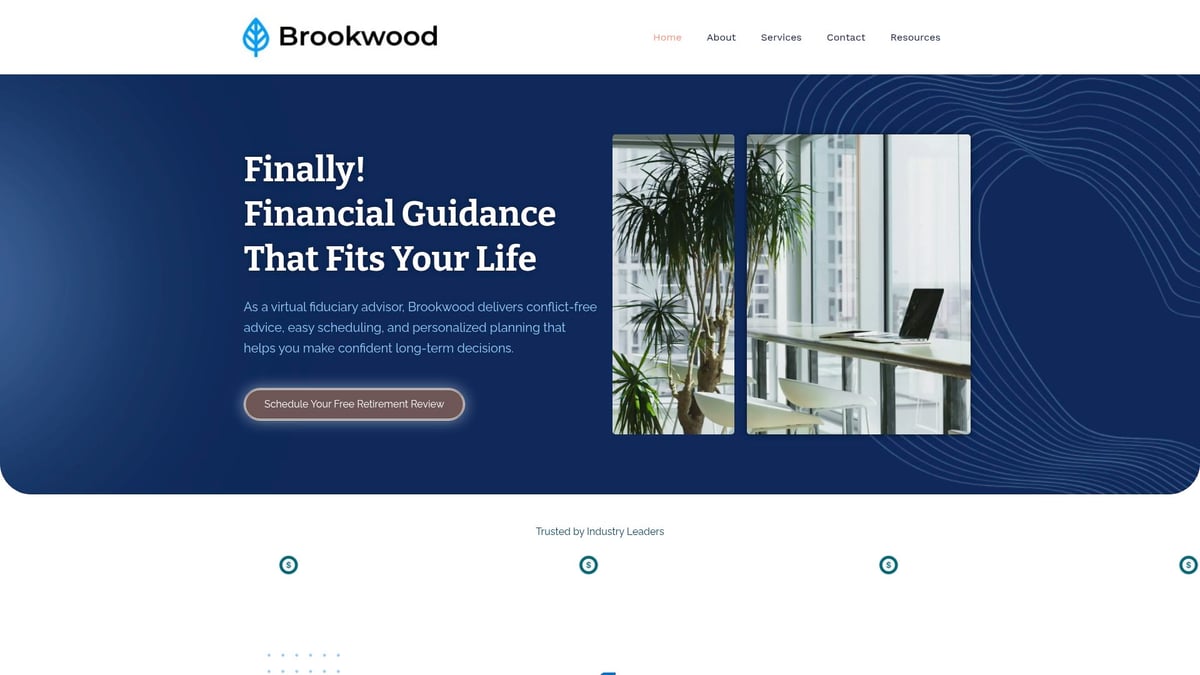
Key features include user-friendly client portals, virtual meetings, and transparent fee structures. This model increases accessibility and trust, especially for clients who prefer digital engagement or flexible service delivery.
Brookwood’s success demonstrates the importance of aligning technology, service, and ethics to meet the changing expectations of the modern marketplace.
Leveraging Technology and Data for Competitive Advantage
The rapid pace of technology is reshaping the financial consulting company landscape. Leaders must harness digital innovation to stand out, streamline operations, and deliver superior client experiences. In 2026, leveraging the right tools is not optional, it is essential for future-ready firms.

Digital Tools Transforming Consulting Operations
For any financial consulting company, adopting advanced digital tools is now the standard. AI-driven portfolio management, automated financial planning, and dynamic reporting are becoming industry staples. These solutions help advisors deliver tailored recommendations at scale and respond quickly to market shifts.
Client portals and mobile-first experiences are also central. They empower clients to access their financial data securely, sign documents electronically, and communicate with their advisor anytime. Secure document sharing tools, combined with e-signature solutions, have replaced outdated manual processes.
A recent Deloitte Finance Trends 2026 Survey Release highlights that finance leaders are prioritizing AI integration for cost management and strategic decision-making. As a result, over 70 percent of firms now use AI for client onboarding, giving a financial consulting company a distinct edge in efficiency and client satisfaction.
Data Analytics and Personalization
Data analytics is revolutionizing how a financial consulting company understands and serves its clients. By harnessing big data, firms can identify patterns, forecast needs, and create highly personalized financial plans. Advisors now leverage behavioral finance insights to anticipate client reactions and tailor advice to individual preferences.
Personalized retirement projections are a prime example. When a financial consulting company uses advanced analytics, clients receive more accurate and relevant guidance, which increases retention rates by as much as 20 percent. This level of customization fosters trust and helps clients feel understood.
Firms that invest in robust analytics platforms gain a competitive advantage. They not only improve client outcomes but also enhance operational decision-making, allowing for more agile responses to market changes.
Cybersecurity and Data Privacy Best Practices
With technology adoption comes increased responsibility. Every financial consulting company must prioritize cybersecurity and data privacy. Implementing strong protection protocols—such as multi-factor authentication, encrypted communications, and regular vulnerability assessments—is critical.
Educating both staff and clients about cyber risks should be an ongoing initiative. This includes training on phishing threats, secure password practices, and safe data sharing. Regulatory compliance with frameworks like GDPR and CCPA is non-negotiable for firms operating in global markets.
Maintaining client trust depends on transparent data practices. A financial consulting company that demonstrates a commitment to privacy and security builds lasting relationships and minimizes reputational risk.
Automation and Workflow Optimization
Automation is transforming how a financial consulting company operates behind the scenes. Workflow optimization tools streamline compliance checks, reporting, and billing, freeing up advisors to focus on value-added services. Chatbots and virtual assistants are increasingly used for routine client interactions, providing fast and consistent responses.
Consider the impact: firms that invest in workflow automation report administrative time savings of up to 30 percent. This efficiency enables a financial consulting company to scale its client base without sacrificing service quality.
Outsourcing non-core functions, paired with cloud-based platforms, further boosts scalability. By integrating automation across operations, firms can adapt to evolving demands and maintain a competitive edge in a digital-first marketplace.
Mastering Compliance and Risk Management in 2026
Navigating compliance and risk is essential for any financial consulting company aiming to succeed in 2026. The landscape is more complex than ever, with regulations, technology, and client expectations evolving rapidly. In this section, we break down the major shifts and actionable strategies to help your financial consulting company stay resilient and secure.

Navigating New Regulatory Requirements
The regulatory environment for a financial consulting company in 2026 is shaped by significant updates from both the SEC and FINRA. New rules focus on transparency, fiduciary responsibility, and stricter client protection standards. To remain compliant, firms must stay current with evolving regulations, such as those detailed in the FINRA Rulemaking Updates.
For example, 2026 brings enhanced best interest standards and new disclosure requirements. Financial consulting company leaders must implement policies for ongoing compliance monitoring and train staff to adapt quickly. Staying proactive with regulatory changes helps minimize risks and ensures your firm maintains client trust.
Proactive Risk Management Strategies
Identifying and mitigating risks is crucial for every financial consulting company. The main risk categories include operational, market, and cyber threats. Developing a business continuity plan ensures your firm can withstand market volatility or unexpected disruptions.
Lessons from the 2025 cyberattacks on advisory firms highlight the importance of robust cybersecurity protocols. Key strategies include:
- Regular risk assessments
- Incident response planning
- Continuous monitoring of IT systems
By integrating these practices, your financial consulting company can better anticipate threats and safeguard both client and company assets.
Compliance Technology Solutions
Leveraging RegTech tools is now standard for an advanced financial consulting company. Automated monitoring and reporting streamline compliance tasks, reduce manual errors, and enhance audit readiness. Popular solutions include:
- Automated trade surveillance
- Real-time transaction monitoring
- Integrated compliance reporting platforms
According to recent data, 55% of firms plan to increase RegTech investment in 2026. While these tools bring efficiency, firms should regularly evaluate their effectiveness and ensure staff remain engaged in compliance oversight.
Training and Culture of Compliance
Building a strong compliance culture is an ongoing process for any financial consulting company. Regular training keeps advisors and staff updated on new rules and ethical standards. Hosting quarterly compliance workshops can improve audit outcomes and foster a culture of transparency.
Encourage open communication about compliance concerns and celebrate adherence to best practices. A commitment to continuous education and accountability supports long-term growth and protects your firm’s reputation in a rapidly changing industry.
Client Acquisition, Retention, and Relationship Management
To excel in 2026, a financial consulting company must master every stage of the client journey. From first impression to lasting partnership, each touchpoint shapes reputation, satisfaction, and growth. This section explores proven tactics and emerging trends to help leaders attract, engage, and retain clients in a rapidly evolving market.
Modern Marketing and Brand Building
A strong marketing strategy is crucial for a financial consulting company to stand out in a competitive field. Digital-first approaches such as SEO, educational content, webinars, and active social media presence drive visibility and credibility. Firms with regularly updated blogs often see three times as many inquiries, reflecting the value of thought leadership.
Consider leveraging insights from ongoing industry resources like the Financial consulting blog insights to inform content and stay on top of trends. Building trust goes beyond promotion, requiring transparency about services, fees, and processes. Authentic storytelling and case studies can further differentiate your brand, helping prospective clients connect with your mission and expertise.
Client Onboarding and Experience
A frictionless onboarding process sets the tone for a long-term relationship. A financial consulting company should prioritize simplicity, speed, and personalization from the first interaction. Digital forms, secure portals, and e-signatures streamline paperwork, while automated scheduling tools reduce wait times.
Personalized welcome kits, introductory webinars, and proactive communication foster confidence and engagement. The initial experience should showcase the company’s commitment to client goals, making it easy for clients to share information and preferences. Continuous feedback loops during onboarding ensure expectations are met and any concerns addressed promptly.
Retention Strategies and Lifetime Value
Retention is as vital as acquisition for a financial consulting company aiming to thrive in 2026. Proactive outreach, regular reviews, and tailored check-ins build ongoing trust. Offering value-added services, such as market updates and financial education, increases client engagement and satisfaction.
Data shows that annual review meetings can boost retention by 18 percent, highlighting the impact of consistent communication. Implementing loyalty programs or referral incentives can further cement relationships. Leveraging insights from industry-leading blogs empowers firms to adapt retention strategies in response to shifting client needs and market conditions.
Nurturing Long-Term Client Relationships
A future-ready financial consulting company recognizes that client needs evolve over time. Multi-generational planning, family engagement, and life stage-specific advice make relationships resilient and enduring. Hosting community events, peer groups, or virtual forums fosters a sense of belonging beyond transactional service.
Advisors should remain attentive to changes in client circumstances and proactively adjust planning. By positioning the firm as a lifelong partner, consultants can guide clients through transitions, from career milestones to retirement and legacy planning. This approach deepens trust and creates advocates who refer new clients organically.
Measuring Success and Client Satisfaction
Measuring and refining client experience is essential for sustainable growth. A financial consulting company should employ tools such as Net Promoter Score (NPS), regular surveys, and feedback sessions to capture satisfaction levels. High-growth firms often track these metrics, using data to inform service improvements and training initiatives.
Table: Key Metrics for Client Success
| Metric | Purpose | Frequency |
|---|---|---|
| NPS | Gauges loyalty | Quarterly |
| Client Retention % | Tracks long-term value | Annually |
| Satisfaction Score | Measures service quality | Ongoing |
By embedding feedback into the firm’s culture, leaders can identify trends, address pain points, and celebrate successes. This data-driven approach ensures a financial consulting company remains responsive and client-centric, building a resilient foundation for the future.
Best Practices and Case Studies from Leading Firms
Staying ahead as a financial consulting company in 2026 requires a blend of innovation, resilience, and forward-thinking leadership. Leading firms are shaping the industry by reimagining business models, learning from disruption, building thought leadership, and committing to continuous growth. Here, we examine how top performers in the financial consulting company space are setting new standards, and what you can learn from their journeys.
Innovative Business Models and Success Stories
The most successful financial consulting company leaders are embracing virtual and hybrid models to meet evolving client needs. Firms that pivoted to remote-first operations during the last few years have not only improved efficiency but also broadened their reach. For example, companies specializing in ESG advisory or cross-border services have captured emerging markets and diversified their revenue streams.
Notably, the top 10 percent of consulting firms in 2025 outpaced peers by focusing on subscription-based pricing and modular service offerings. These models provide flexibility for clients and recurring revenue for the financial consulting company. To stay competitive, many firms are leveraging AI integration and advanced analytics, as highlighted in Professional Services Trends 2026.
In summary, innovation in service delivery, pricing, and technology adoption is now a hallmark of a thriving financial consulting company.
Lessons Learned from Market Disruptions
Economic volatility and regulatory shifts in recent years have tested the resilience of every financial consulting company. Firms that weathered 2025’s market turbulence did so by adapting their risk frameworks and communication strategies.
One mid-size financial consulting company responded to sudden market downturns by increasing the frequency of client check-ins and providing timely, transparent updates. This approach not only reassured clients but also reinforced trust during uncertain times.
Regulatory changes, such as the overhaul in 2025, required firms to adjust compliance protocols quickly. Those with agile governance structures and robust training programs navigated these transitions more smoothly. The lesson is clear: adaptability, clear communication, and proactive risk management are essential for long-term success in the financial consulting company landscape.
Thought Leadership and Industry Influence
Establishing industry authority has become a strategic priority for every growth-focused financial consulting company. Leading firms invest in publishing research, hosting educational webinars, and speaking at industry events. This thought leadership not only enhances credibility but also attracts new clients and talented professionals.
Data shows that firms with recognized industry thought leaders attract twice as many clients compared to their peers. By sharing expertise on market trends, regulation, and client needs, these firms position themselves as go-to advisors in a crowded market.
Collaboration with professional associations and strategic partnerships further amplifies influence. Ultimately, a financial consulting company that prioritizes thought leadership differentiates itself and drives sustainable growth.
Continuous Improvement and Future-Proofing
Continuous improvement is a defining trait of high-performing financial consulting company teams. Firms invest in ongoing training, upskilling advisors in technology, compliance, and client engagement. This commitment ensures teams remain agile and prepared for future industry shifts.
Embracing new technology, such as AI-driven planning tools, is key to future-proofing operations. Leading firms also prioritize diversity and inclusion, recognizing that a broad range of perspectives enhances client service. For example, About our consulting team showcases how a diverse, credentialed team can deliver exceptional outcomes.
Below is a summary of best practices:
| Best Practice | Impact |
|---|---|
| Virtual/hybrid service model | Expanded client reach |
| Subscription pricing | Predictable revenue |
| Thought leadership | Increased credibility |
| Continuous training | Future-ready teams |
| Diversity and inclusion | Enhanced client relationships |
By embedding these principles, a financial consulting company can adapt, thrive, and lead in 2026 and beyond.
